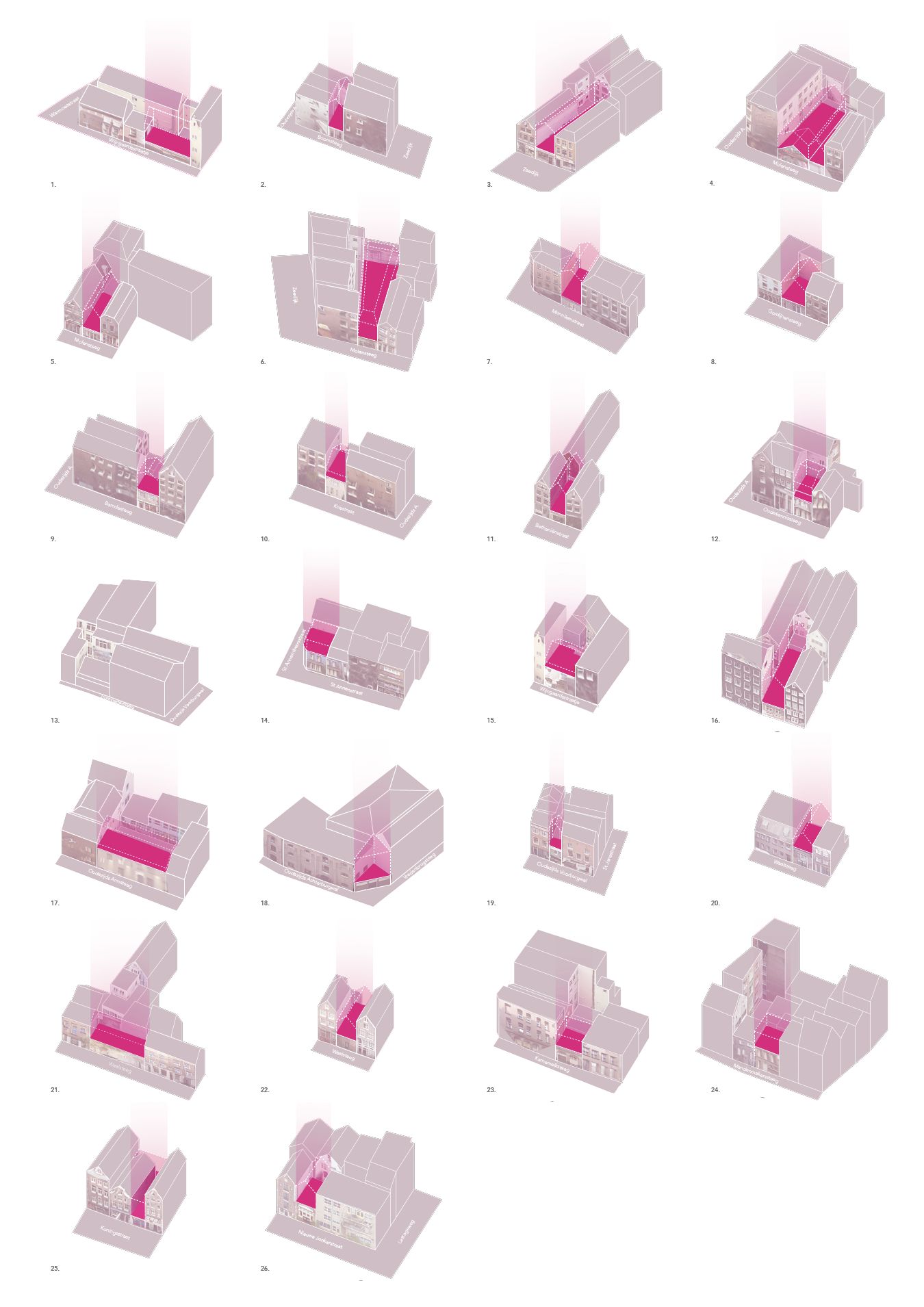
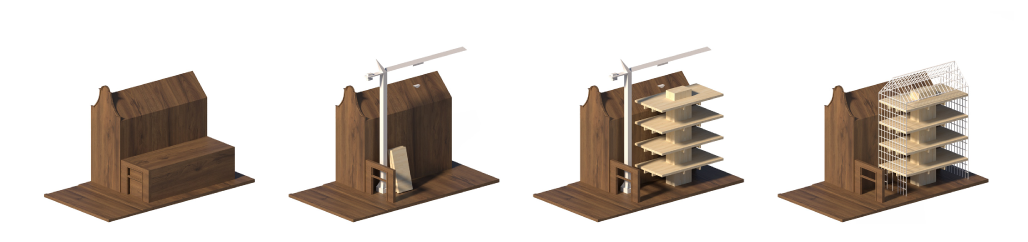
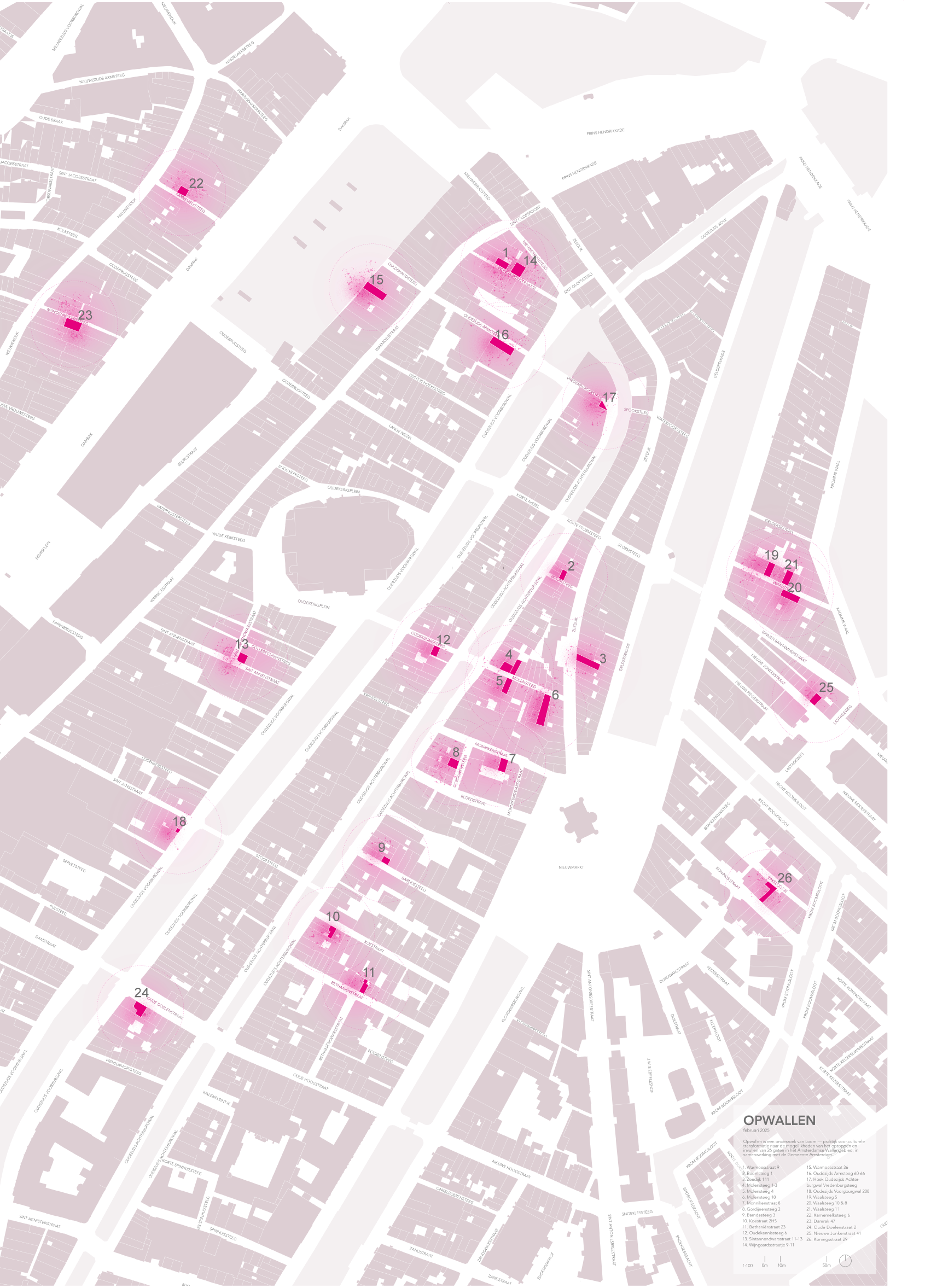
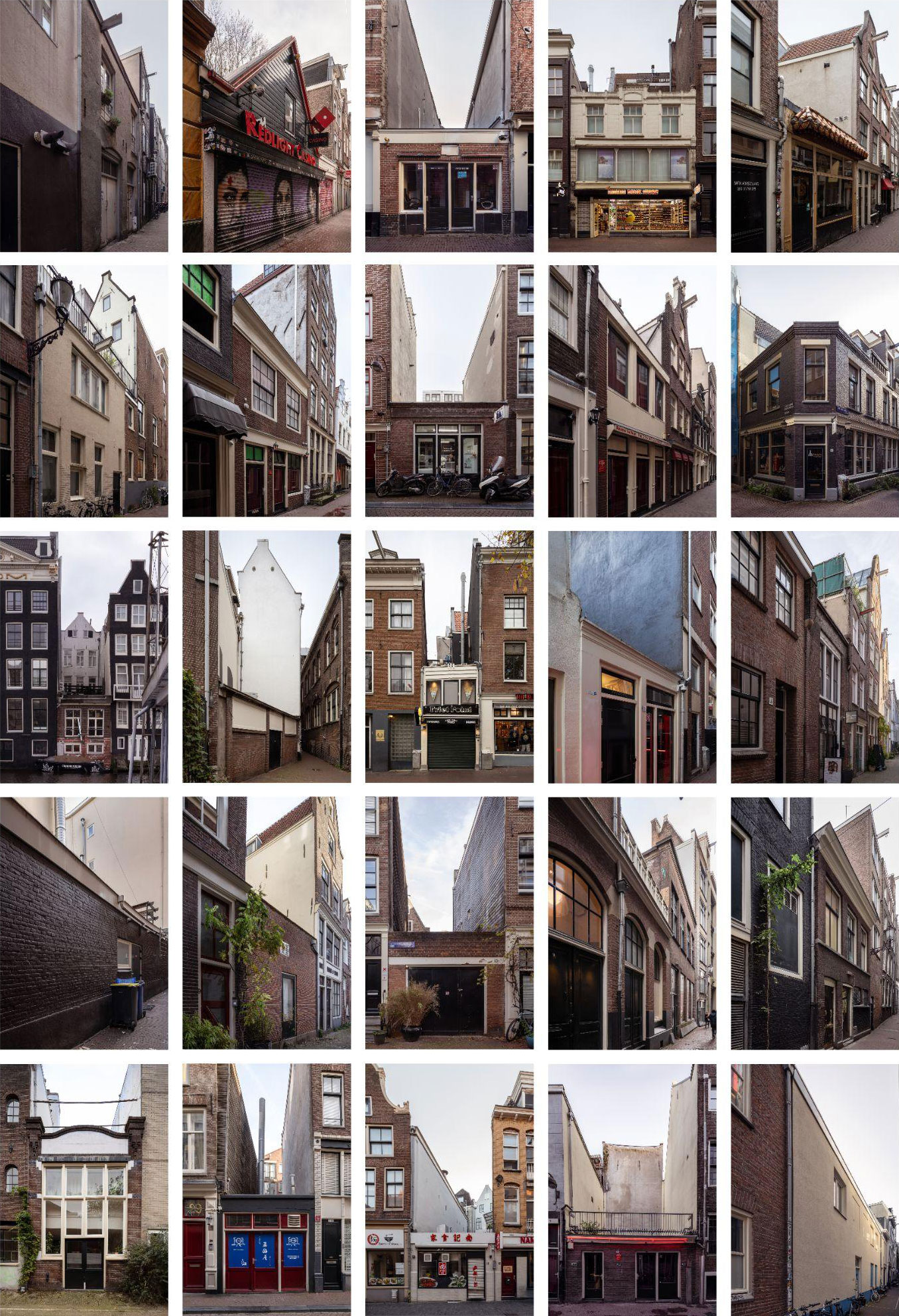
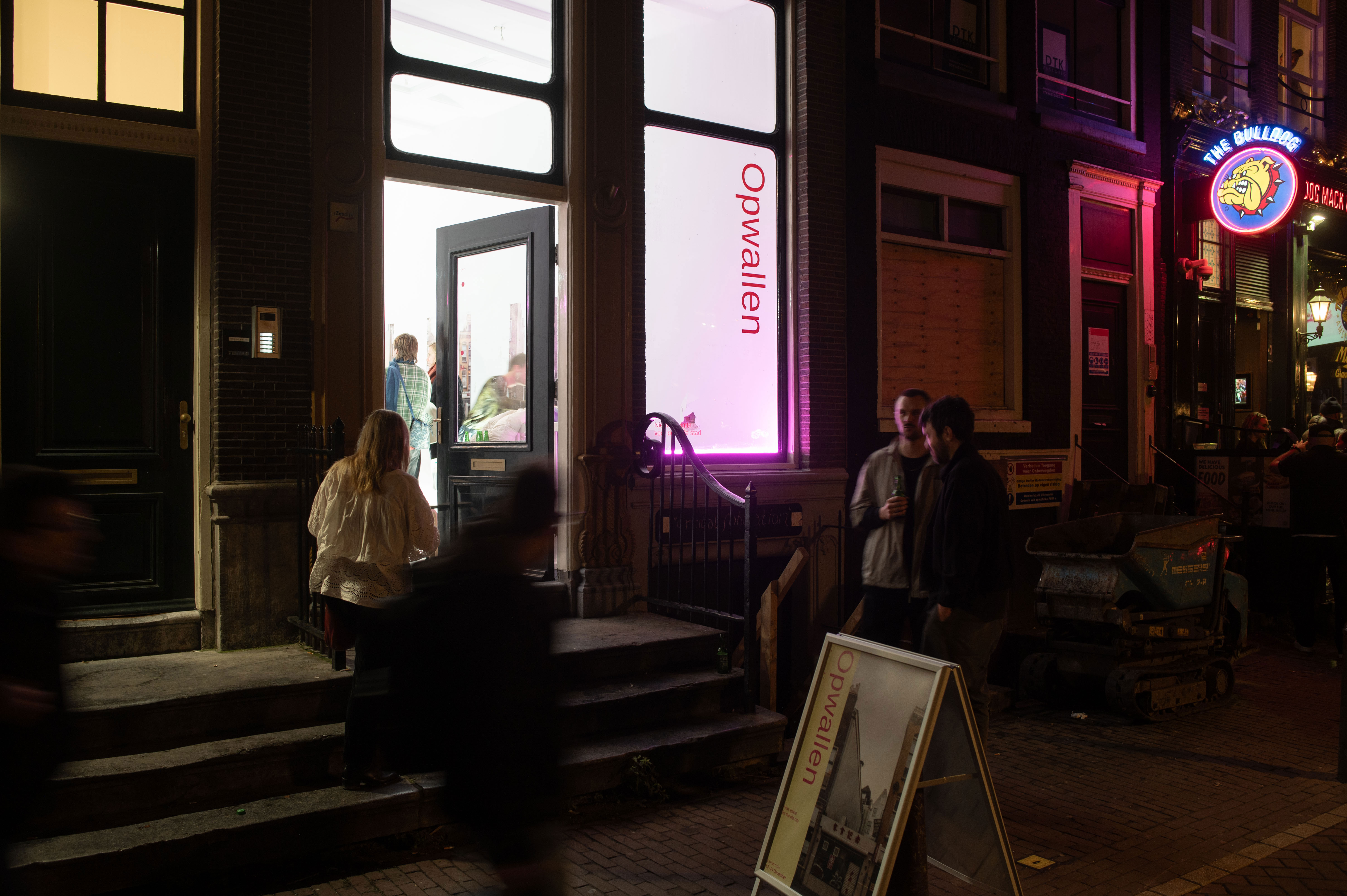
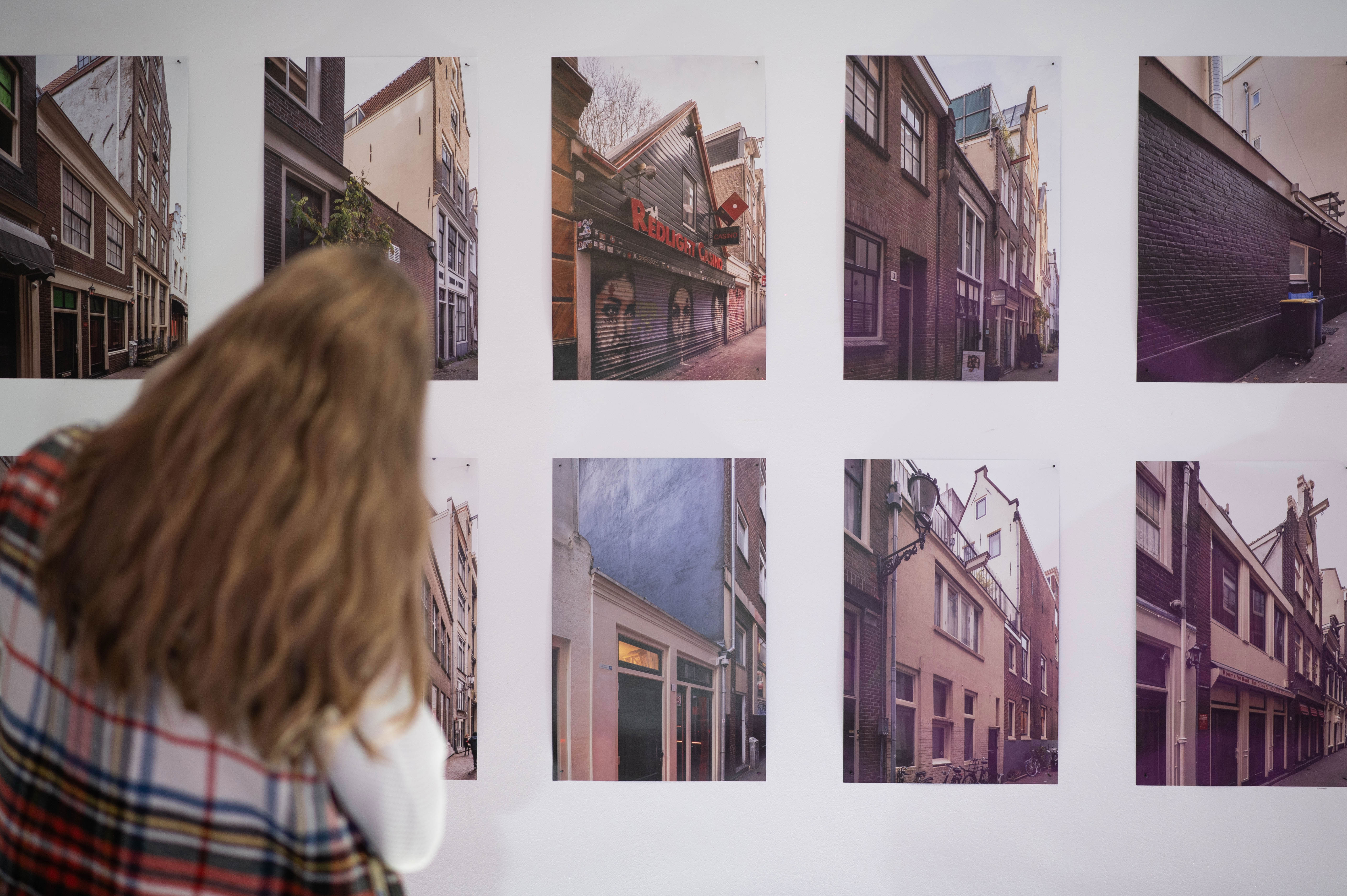
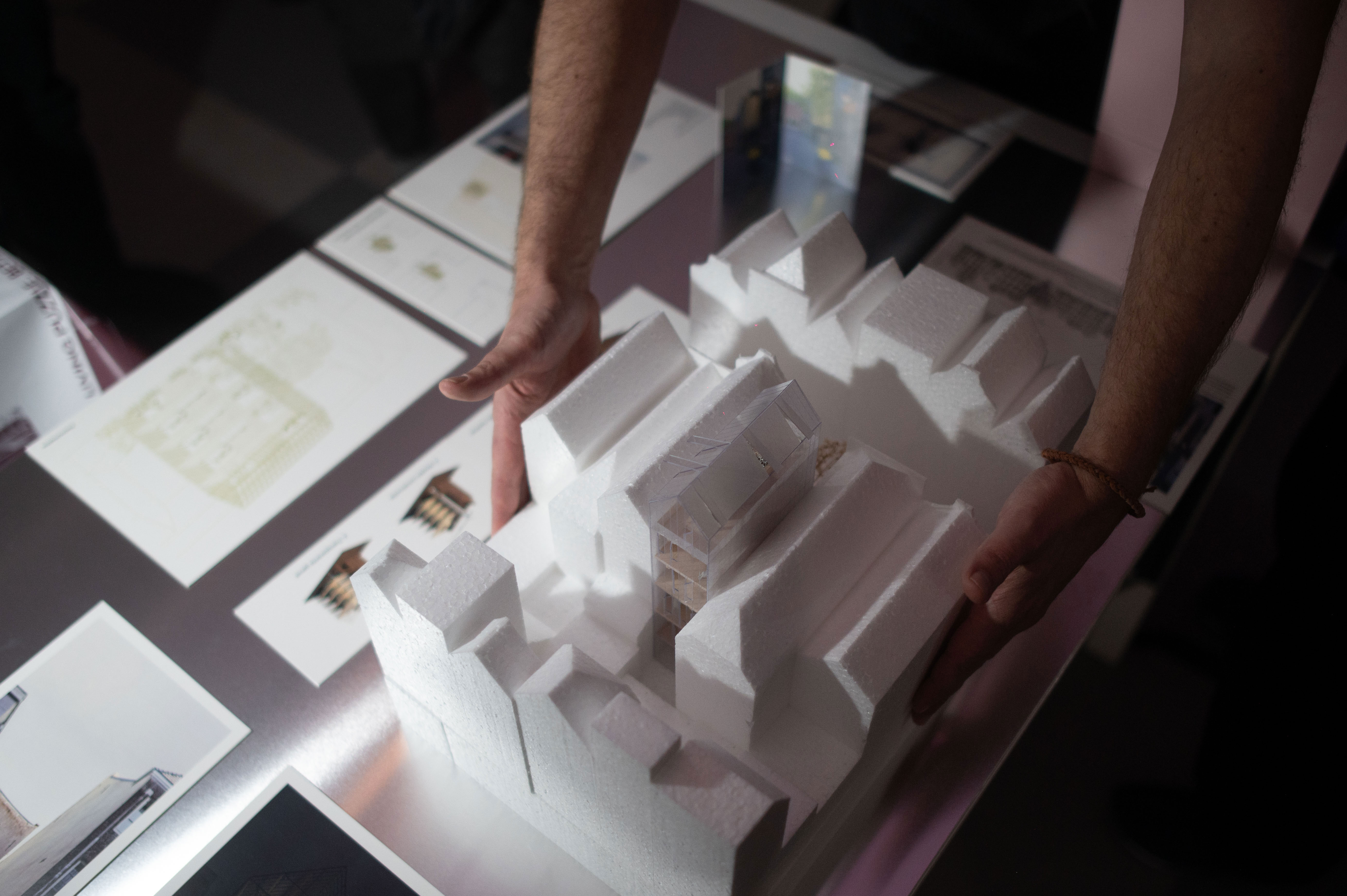
The Wallen district is literally full of gaps. Across dozens of sites, unused space sits above existing one or two-storey buildings. Space for affordable housing and for cultural renewal. The Opwallen project activates this residual space through new architecture and socio-ecological densification, adding a contemporary layer to Amsterdam’s historic city centre. Opwallen is an initiative by Loom, a practice for cultural transformation, and is supported by the Municipality of Amsterdam. HOH is one of the offices invited to translate the initiative into a concrete spatial proposal.
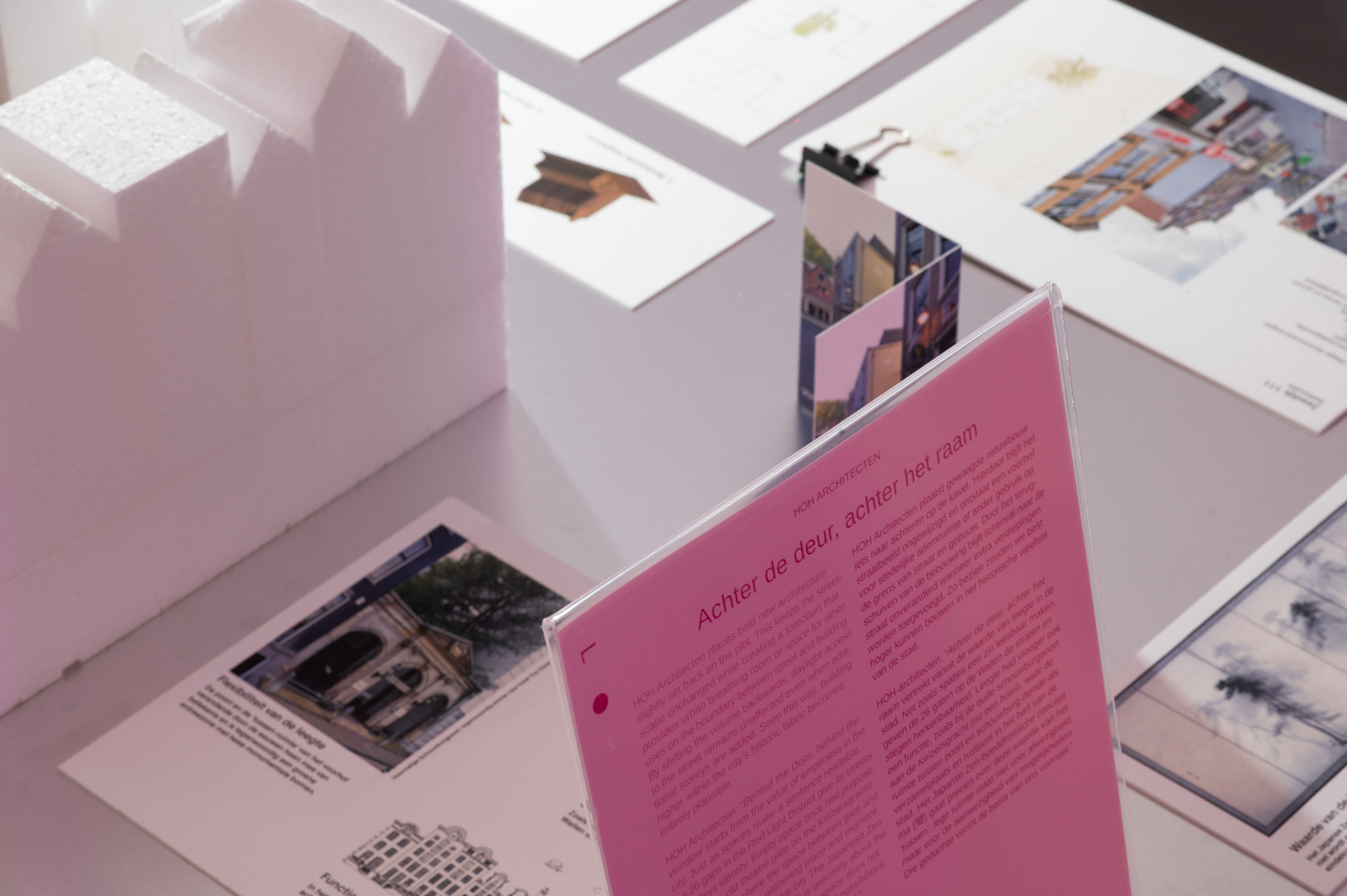
The proposal ‘Behind the Door, Behind the Window’ starts from the value of emptiness in the city. The 26 ‘gaps’ in the Wallen give streets and alleys their scale and recognisability, much like spaces give structure to a sentence. Historically, emptiness also served a social function, as with the former theatre gate on the Keizersgracht, where the space between gate and theatre acted as a place of gathering and pause. This idea resonates with the Japanese Zen Buddhist concept of ‘ma’ (間), which understands emptiness not as absence but as space for possibility. This notion forms the basis of the design.
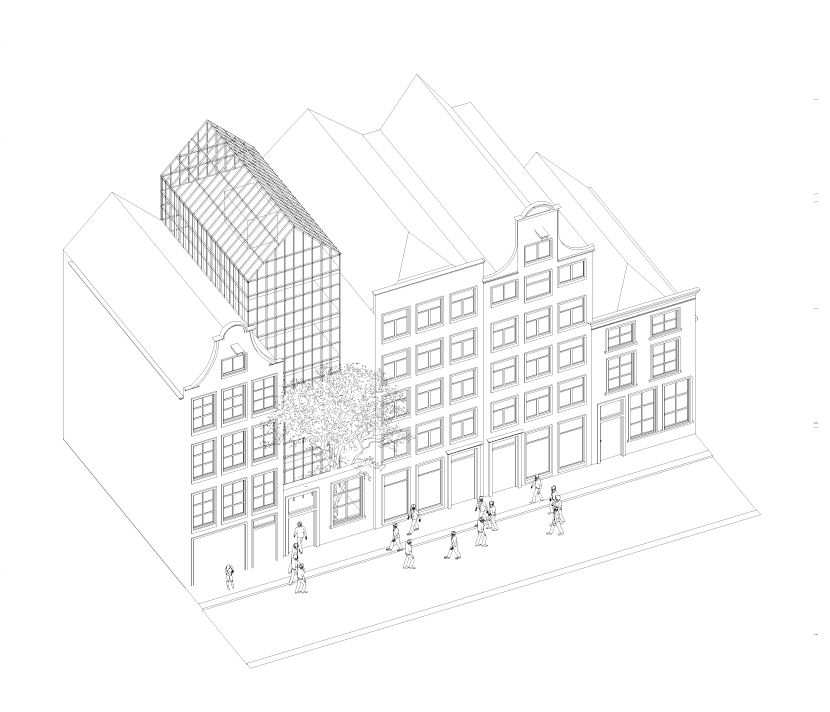
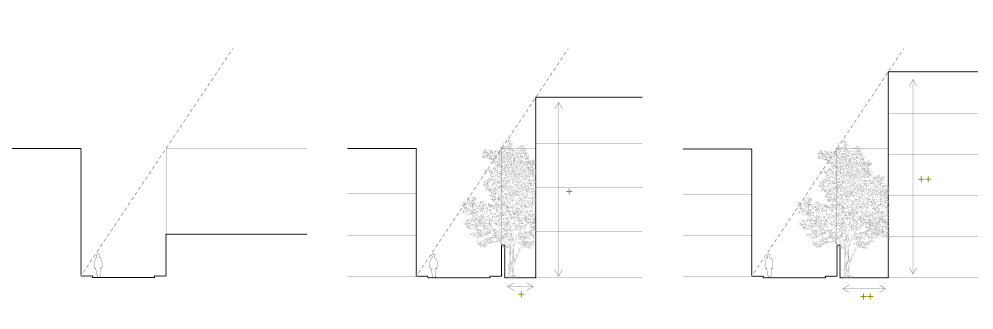
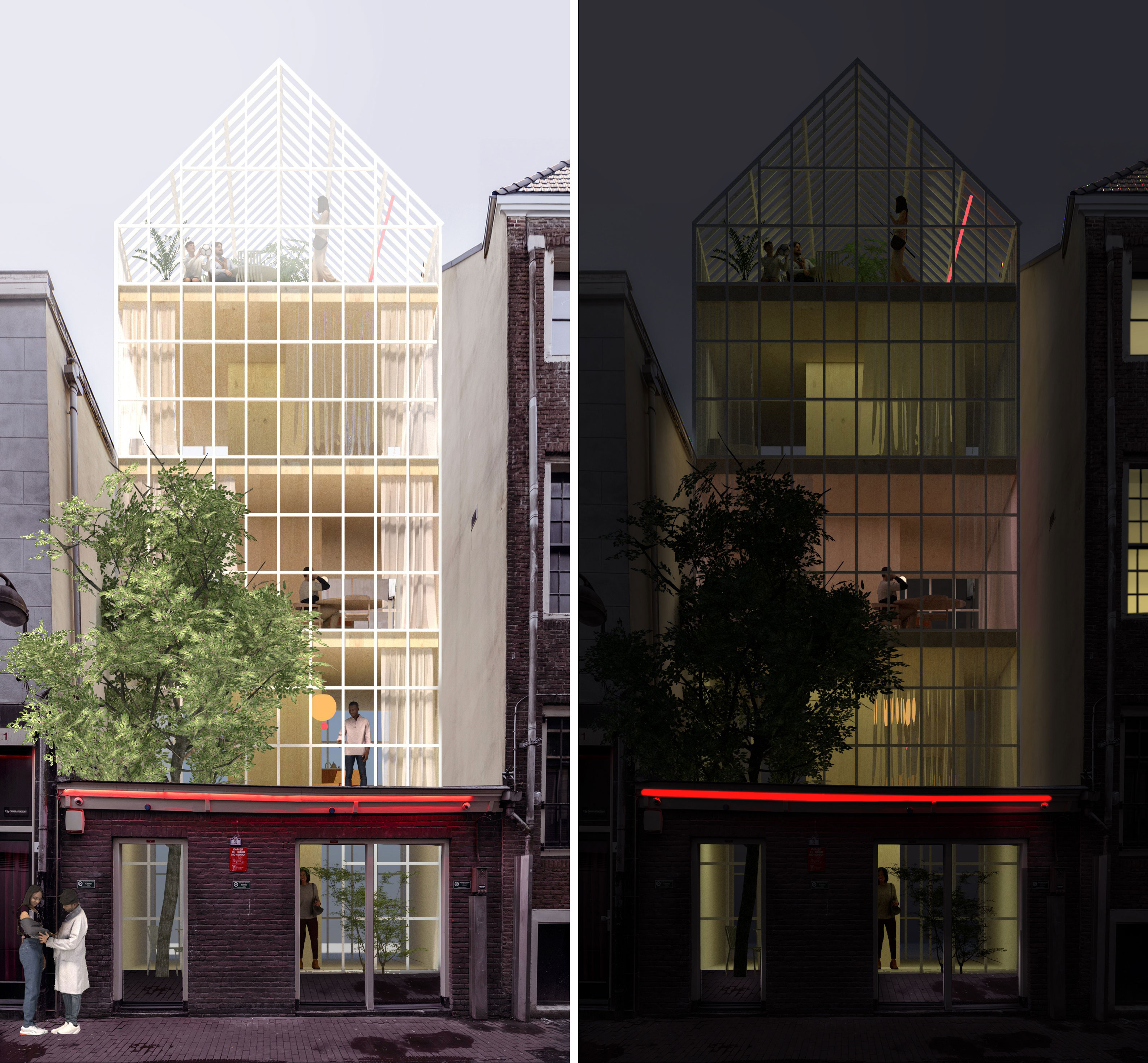
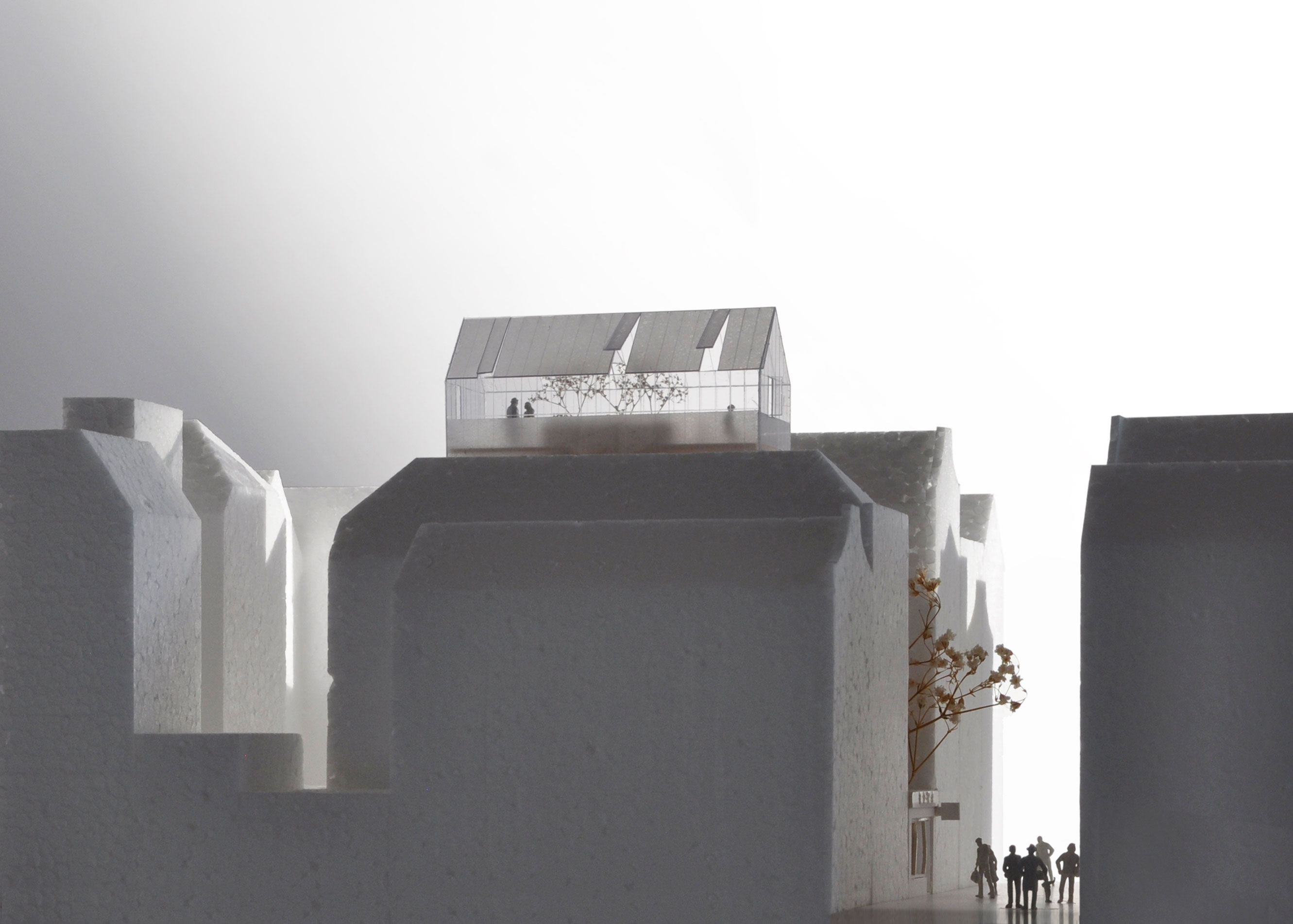
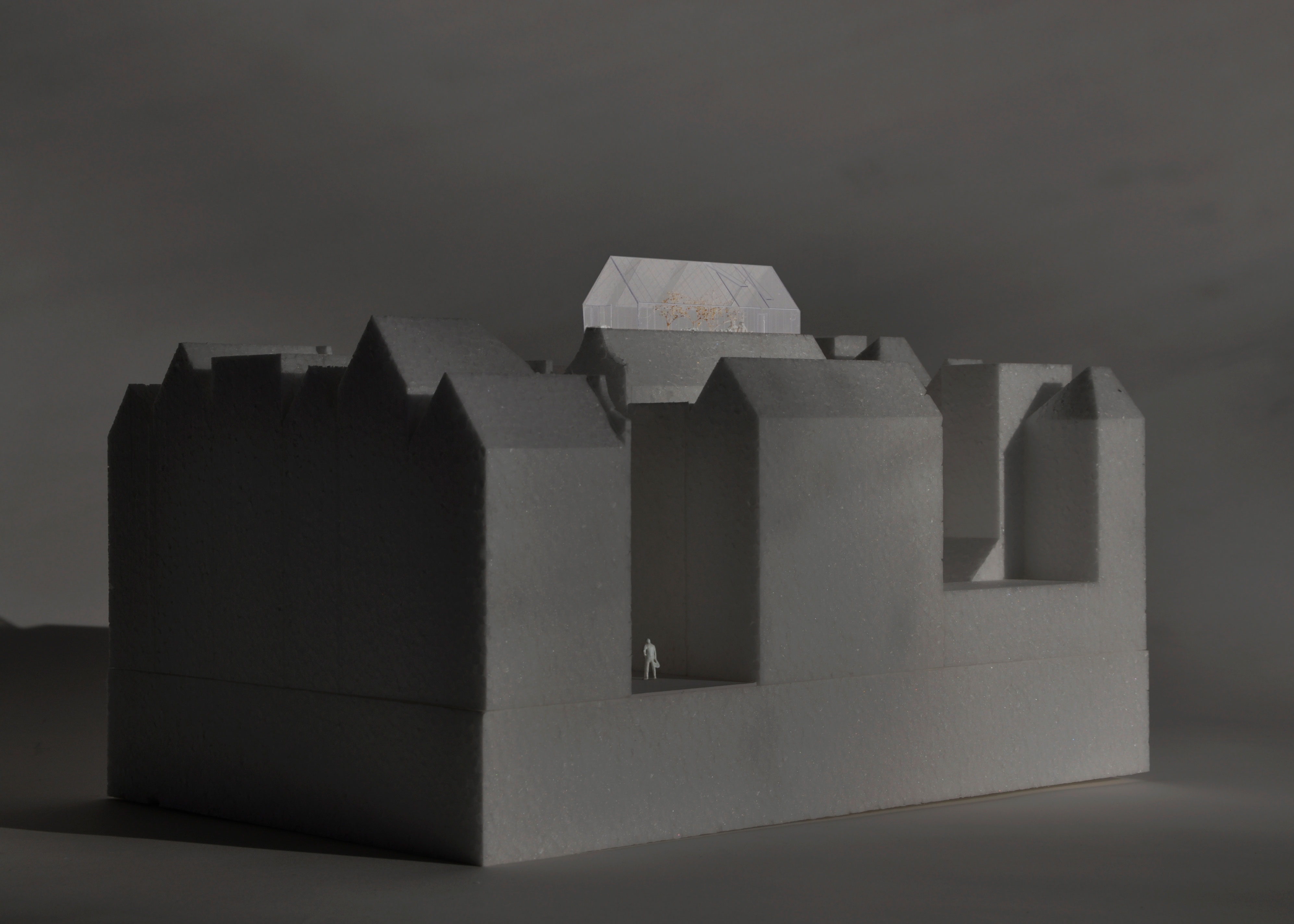
‘Behind the Door, Behind the Window’ celebrates the everyday character of the existing sites. The original street façades are retained, keeping the street wall intact. Behind them, a courtyard emerges, a space in between, followed by a set-back building with multiple residential levels. This recessed positioning allows for greater height without disrupting sightlines at street level. The concealed location provides natural privacy, enabling the new buildings to be open and transparent.
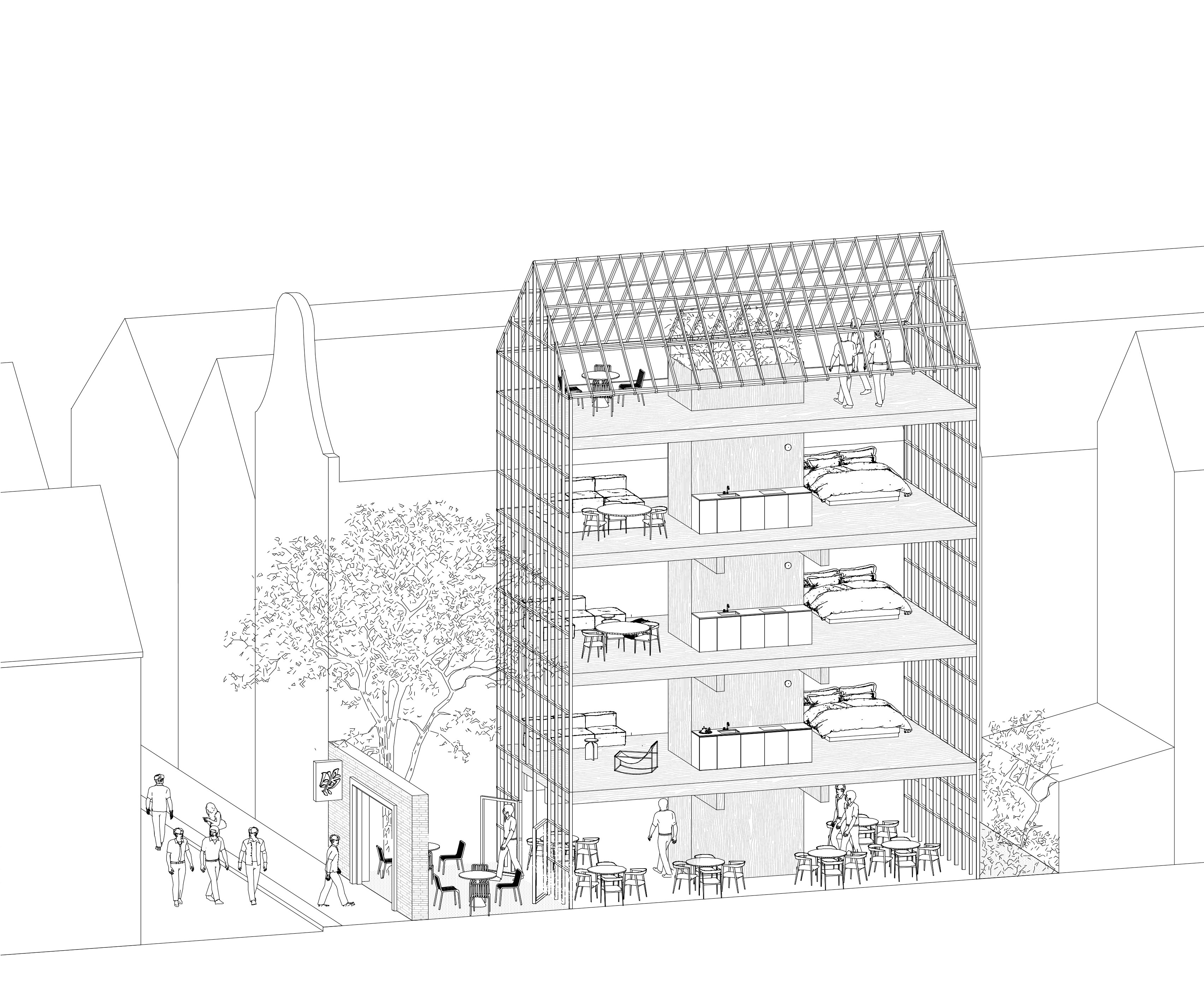
The ground floor programme builds on existing uses. A launderette remains a launderette, with space in the front courtyard to dry laundry. A restaurant gains a quiet forecourt for takeaway visitors. For sex workers, the intermediate space offers greater intimacy for their clients.
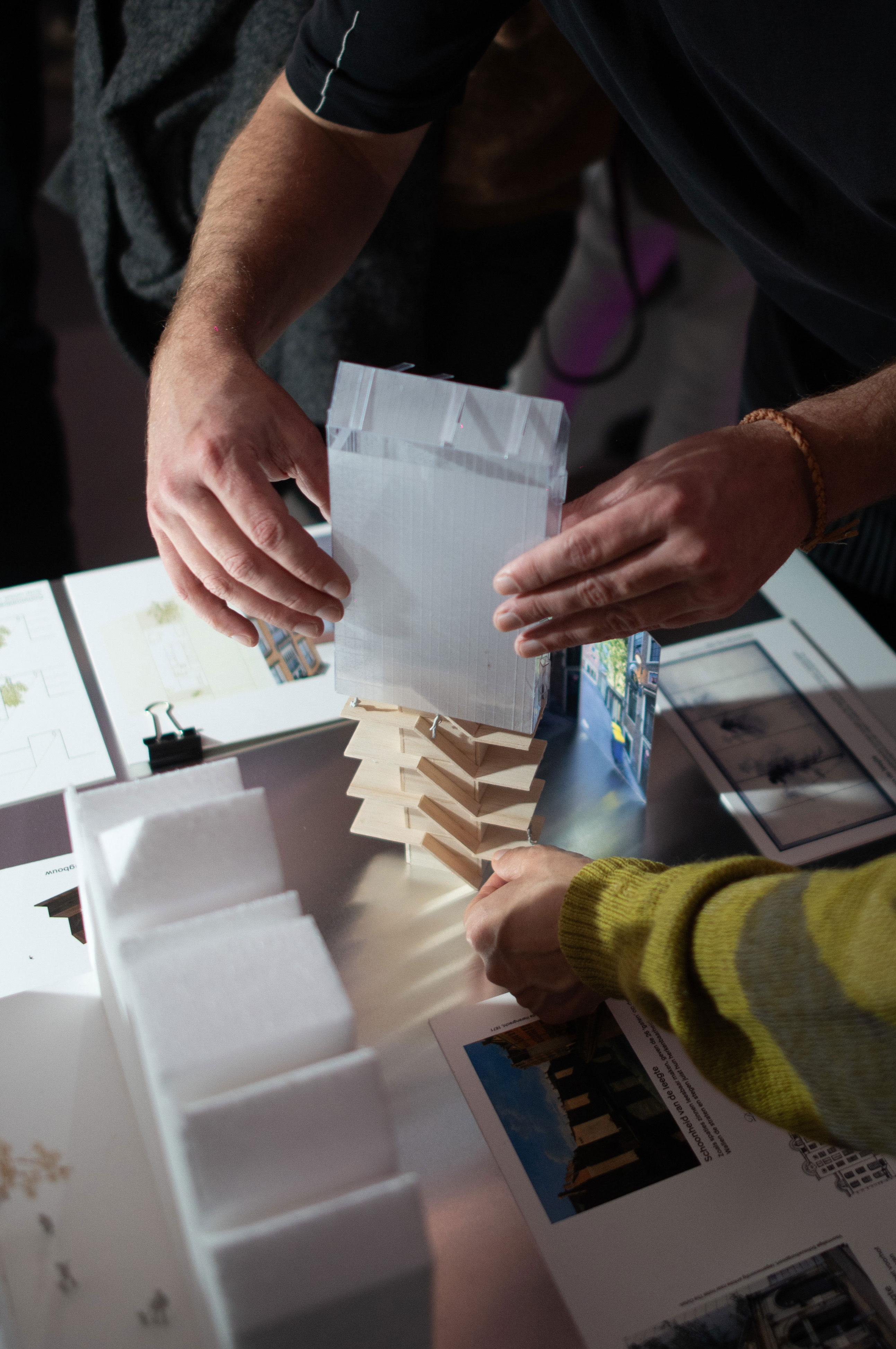
The buildings are constructed entirely in timber. A compact wooden core containing toilet, shower and kitchen supports the floors like a tree with broad branches. The structure is light, legible and aligned with a sustainable future.
The façade is composed as a light glass curtain wall. The neighbourhood’s characteristic pitched roof transforms at the top level into a greenhouse, functioning as a collective indoor-outdoor space for residents. Elevated above its surroundings, this space offers views across the city and acts as a subtle beacon within the historic centre.
Location: Amsterdam
Client: Loom, practice for cultural transformation, Municipality of Amsterdam
Programme: Housing with variable ground floor programme
Status: Study and Exhibition, 2025
Team: Jarrik Ouburg, Freyke Hartemink, Bram van Grinsven
Photography (locations): Anna Odulinska
Photography (exhibition): Adriaan de Groot