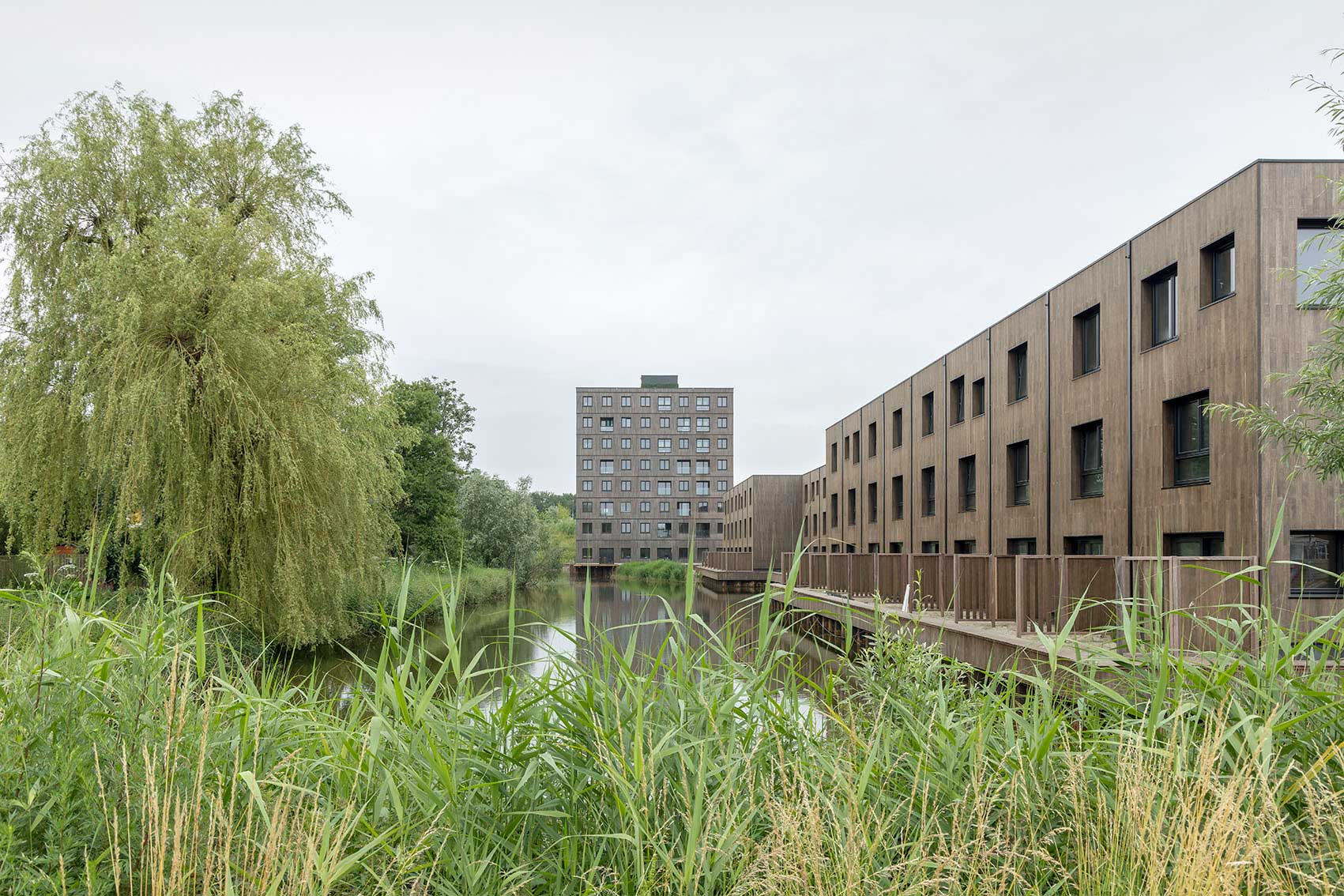
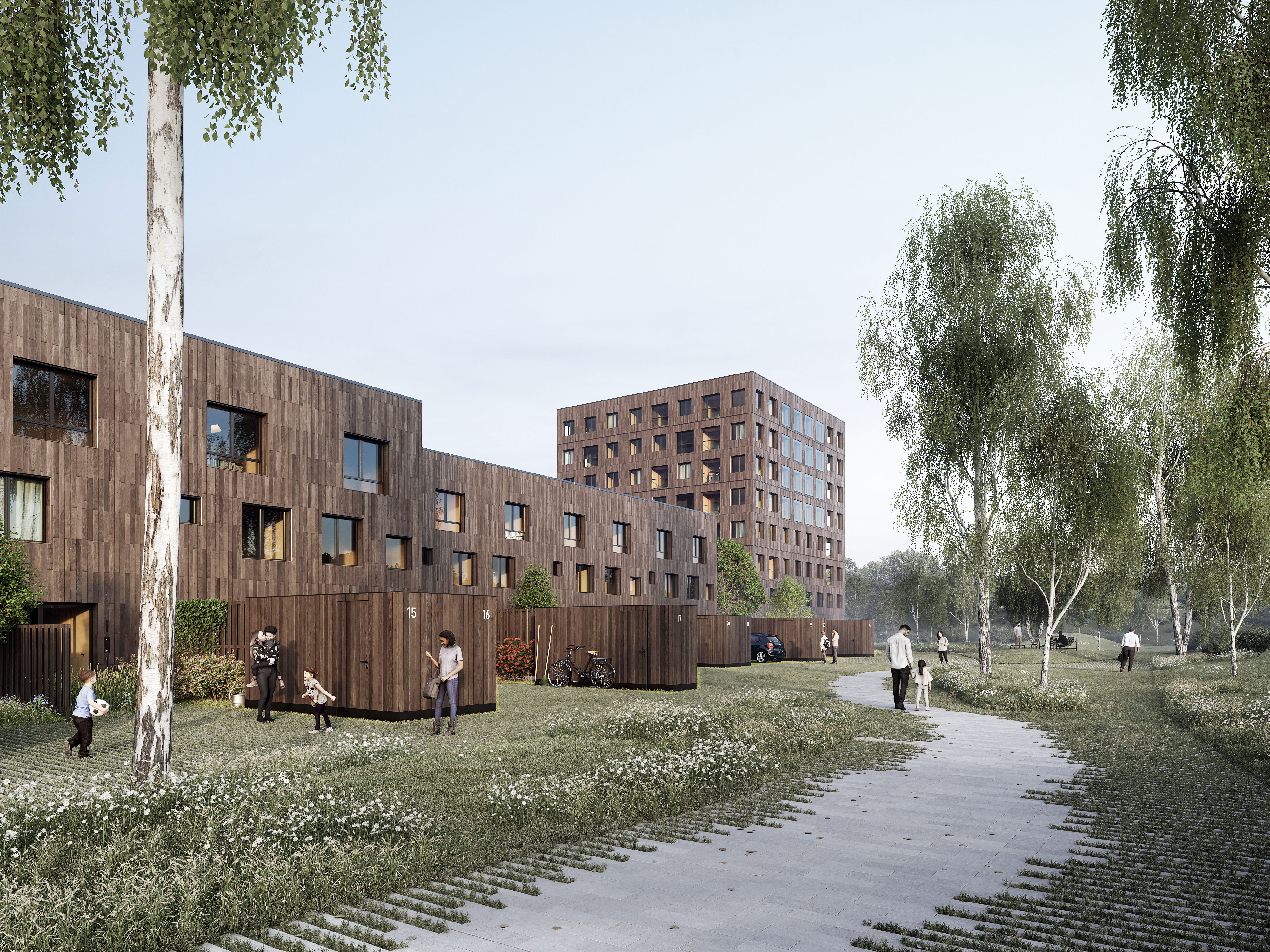
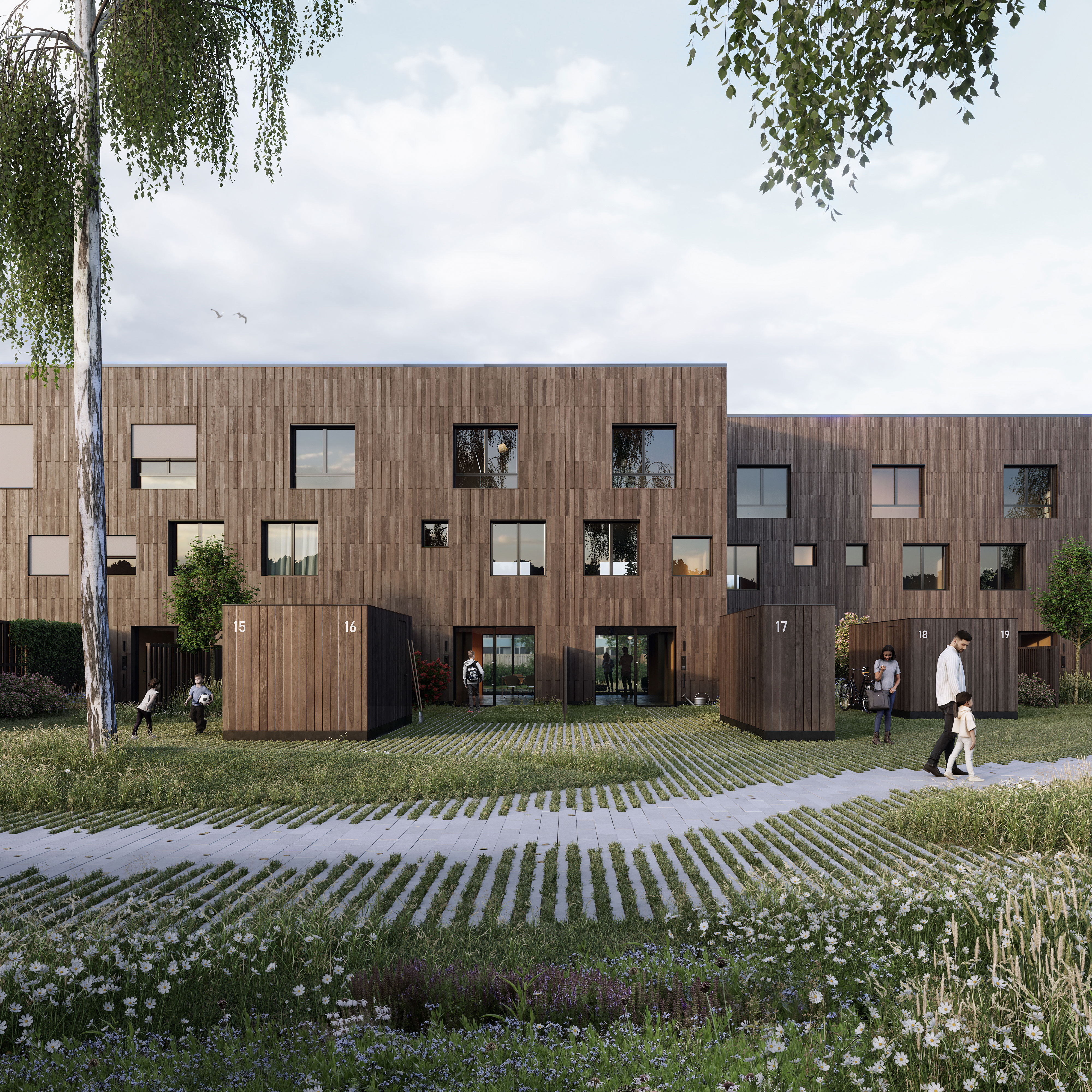
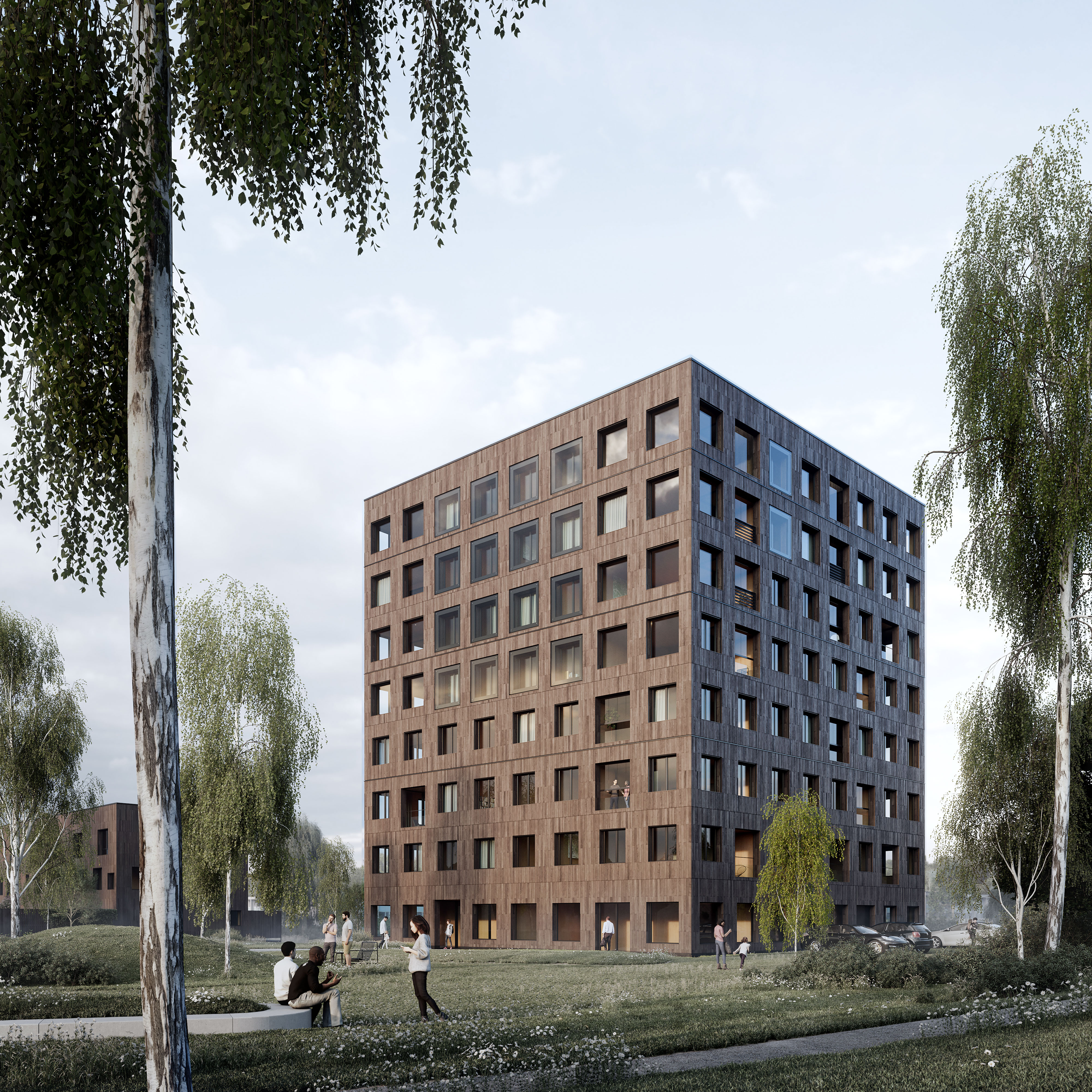
Switi is the urban and landscape extension of the Kelbergen neighbourhood in Amsterdam Zuidoost, comprising an ensemble of a strip of low-rise housing and a residential tower, fully built using biobased materials and integrated into a natural green environment: a contemporary and sustainable interpretation of the original.
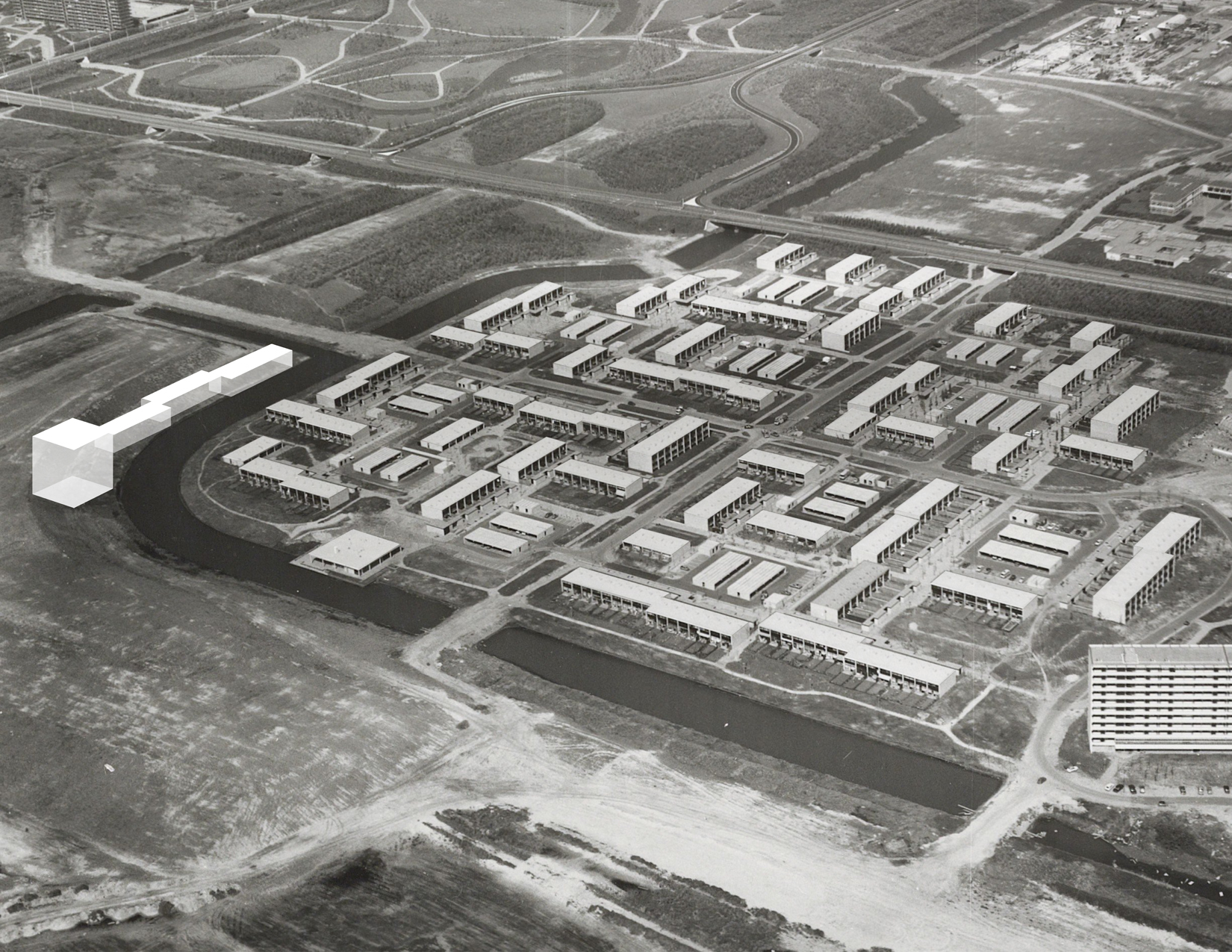
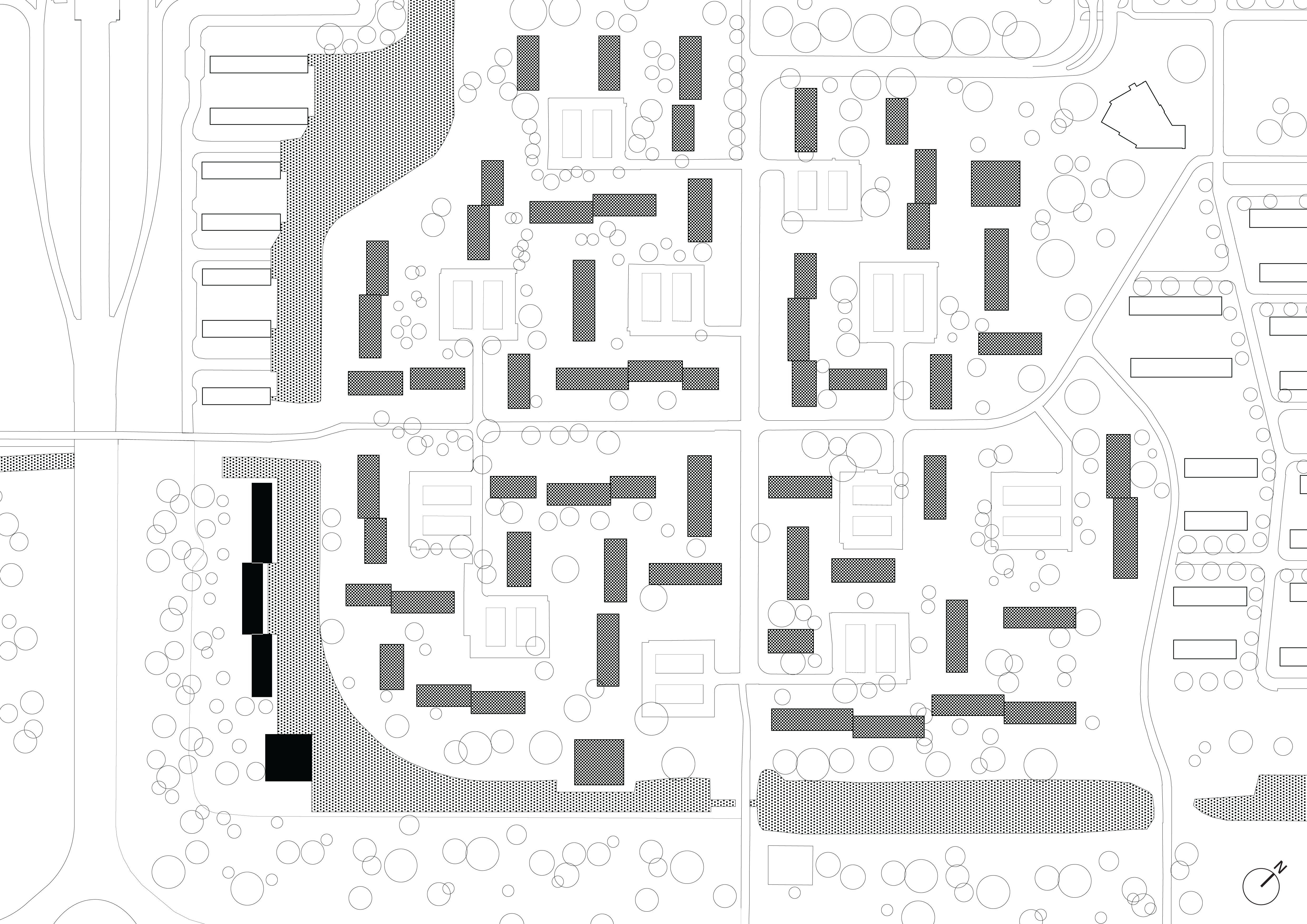
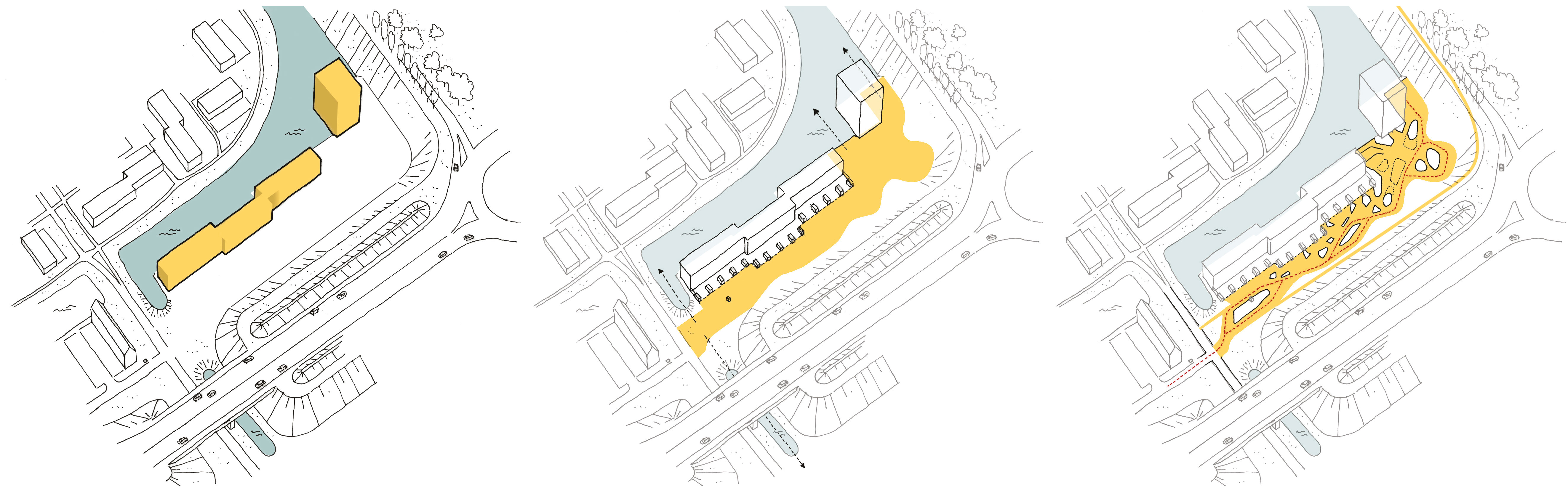
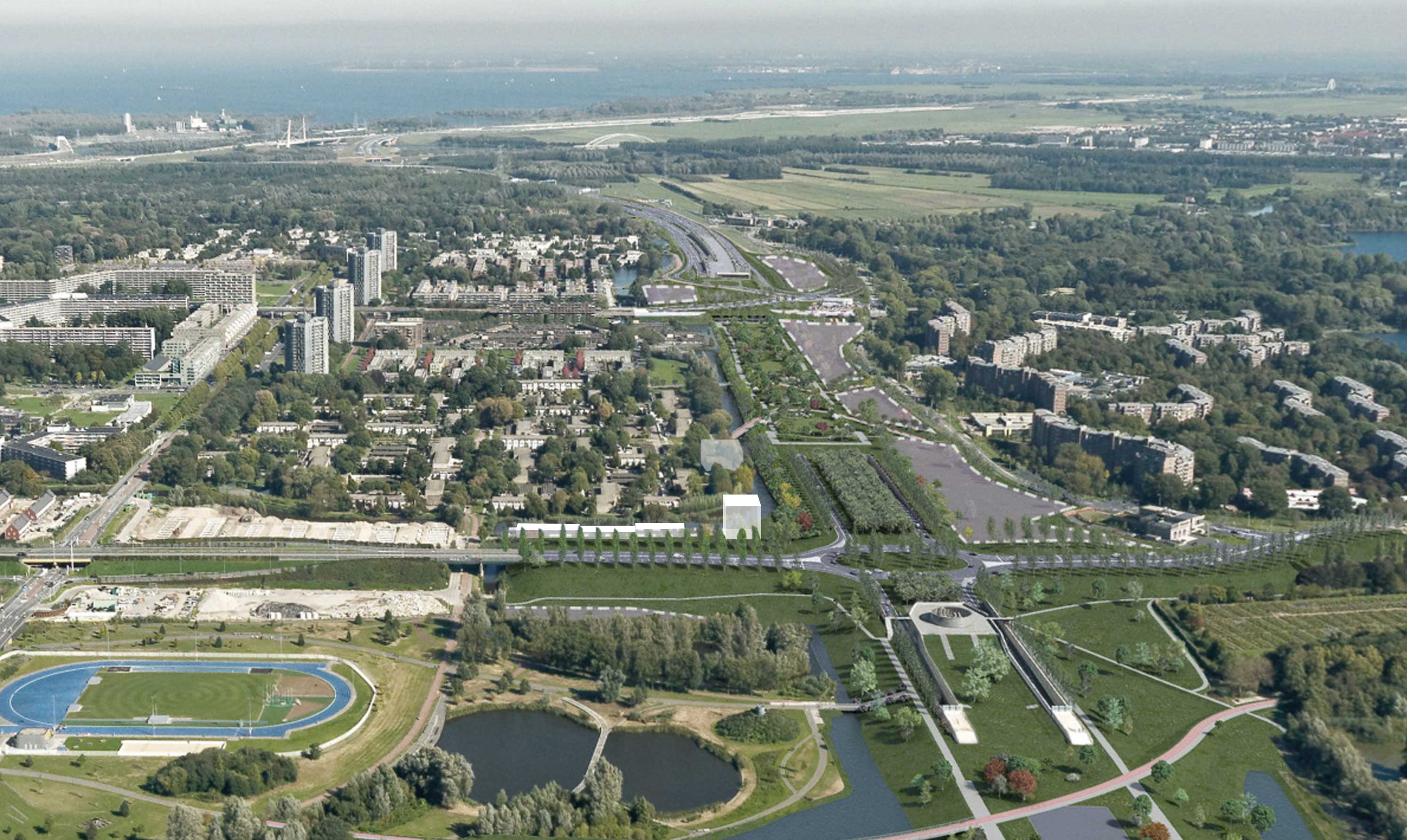
Where large parts of the Bijlmer have been radically renewed since the beginning of this century, Kelbergen still retains its original layout. The low-rise neighbourhood with mainly social housing from 1973 was designed by architect Jan Sterenberg and forms a counterpoint to the high-rise structures of the Bijlmermeer. In the green layout of the original plan, a canal once enclosed the neighbourhood but at the same time separated it from its immediate surroundings and the Gooiseweg, creating a strip of land between road and water. This ‘lost’ strip forms the development area for Switi.
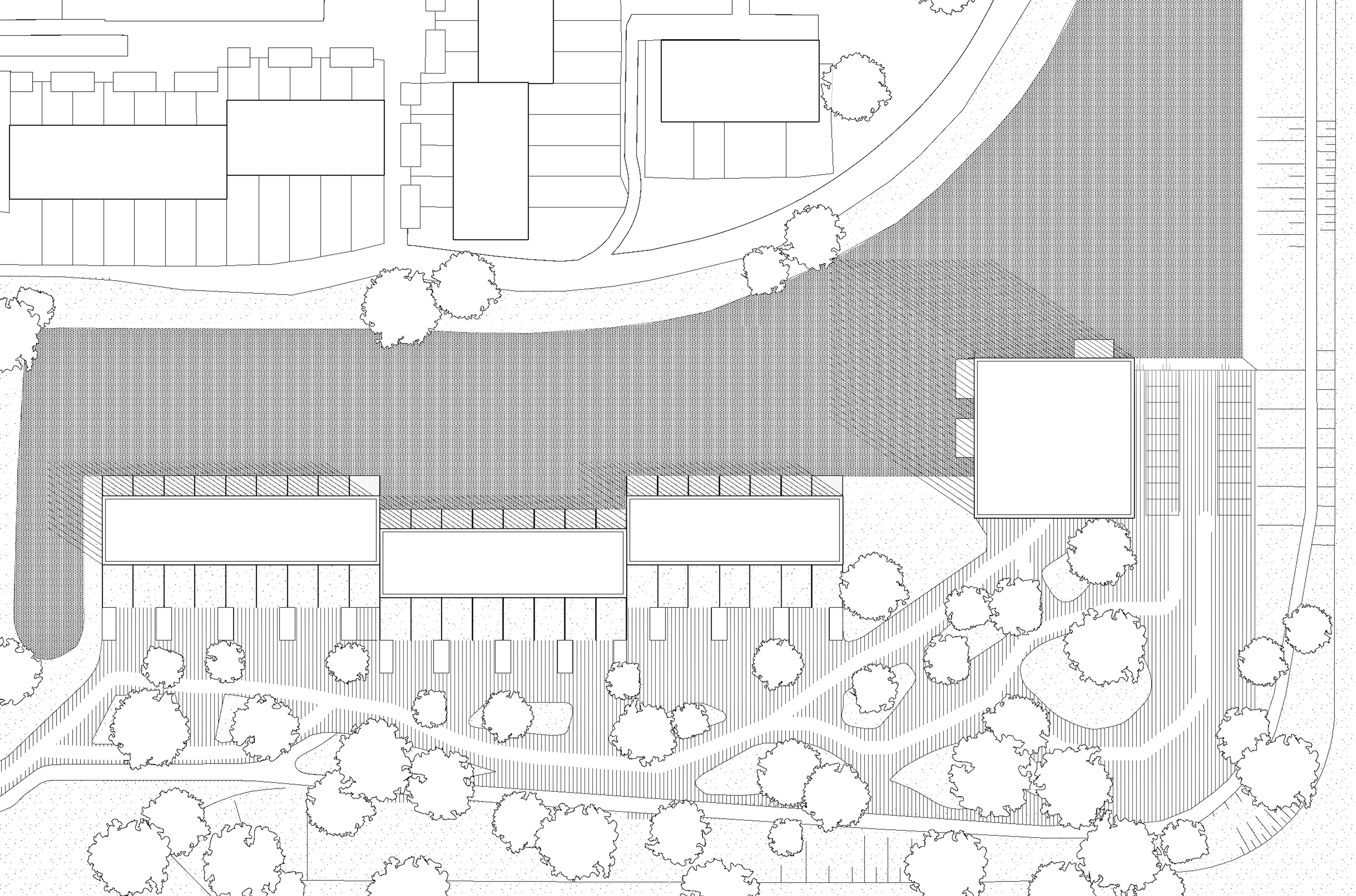
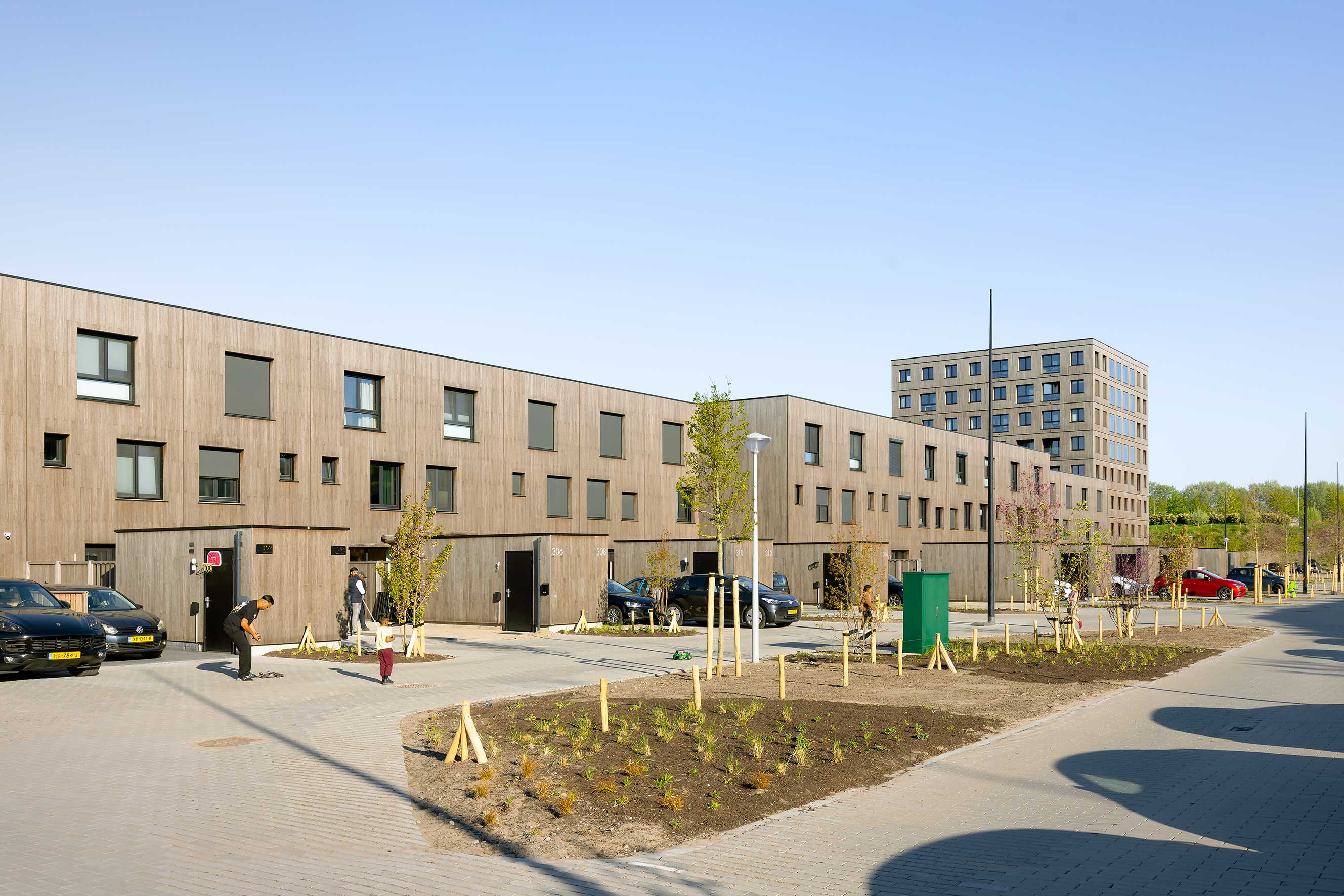
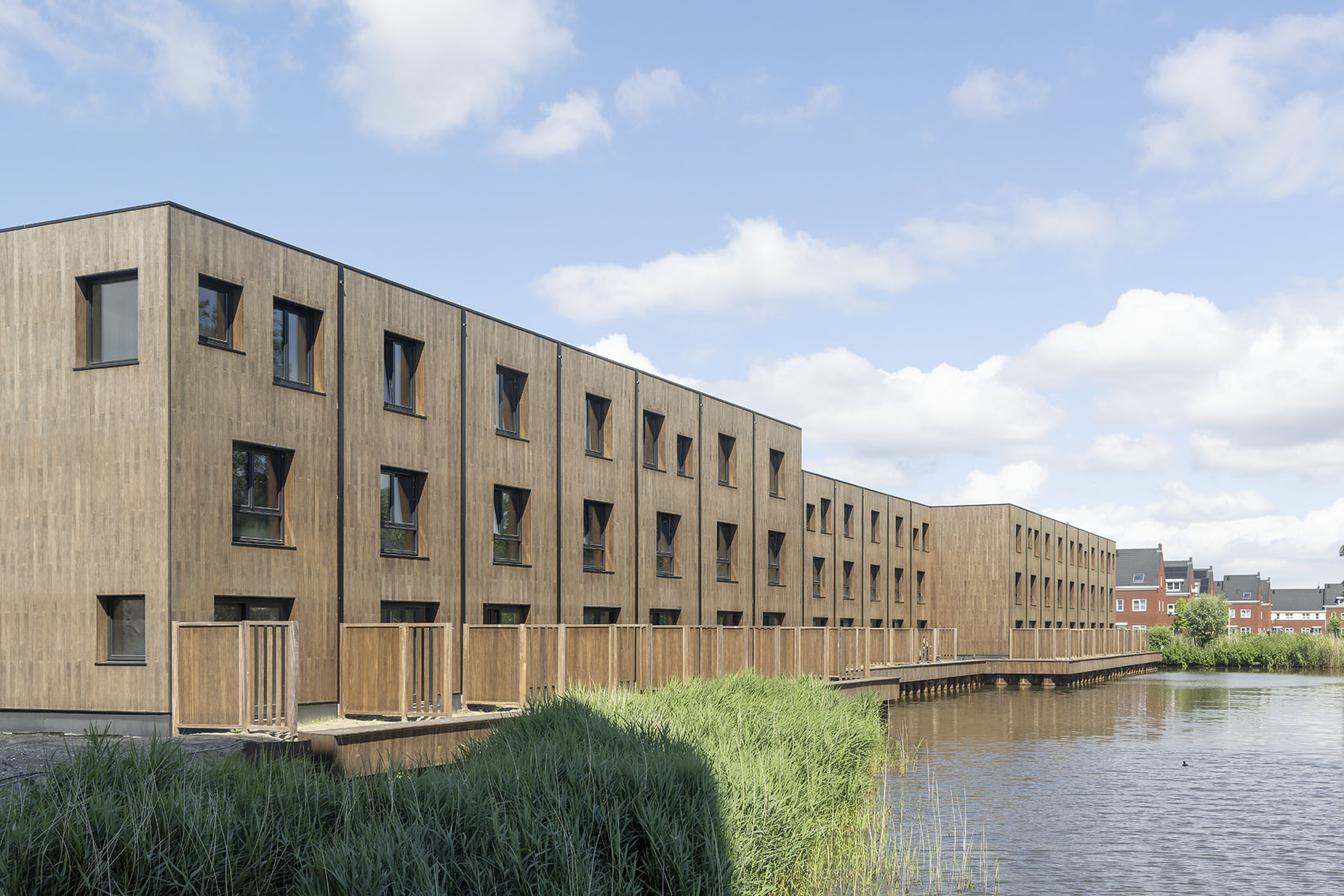
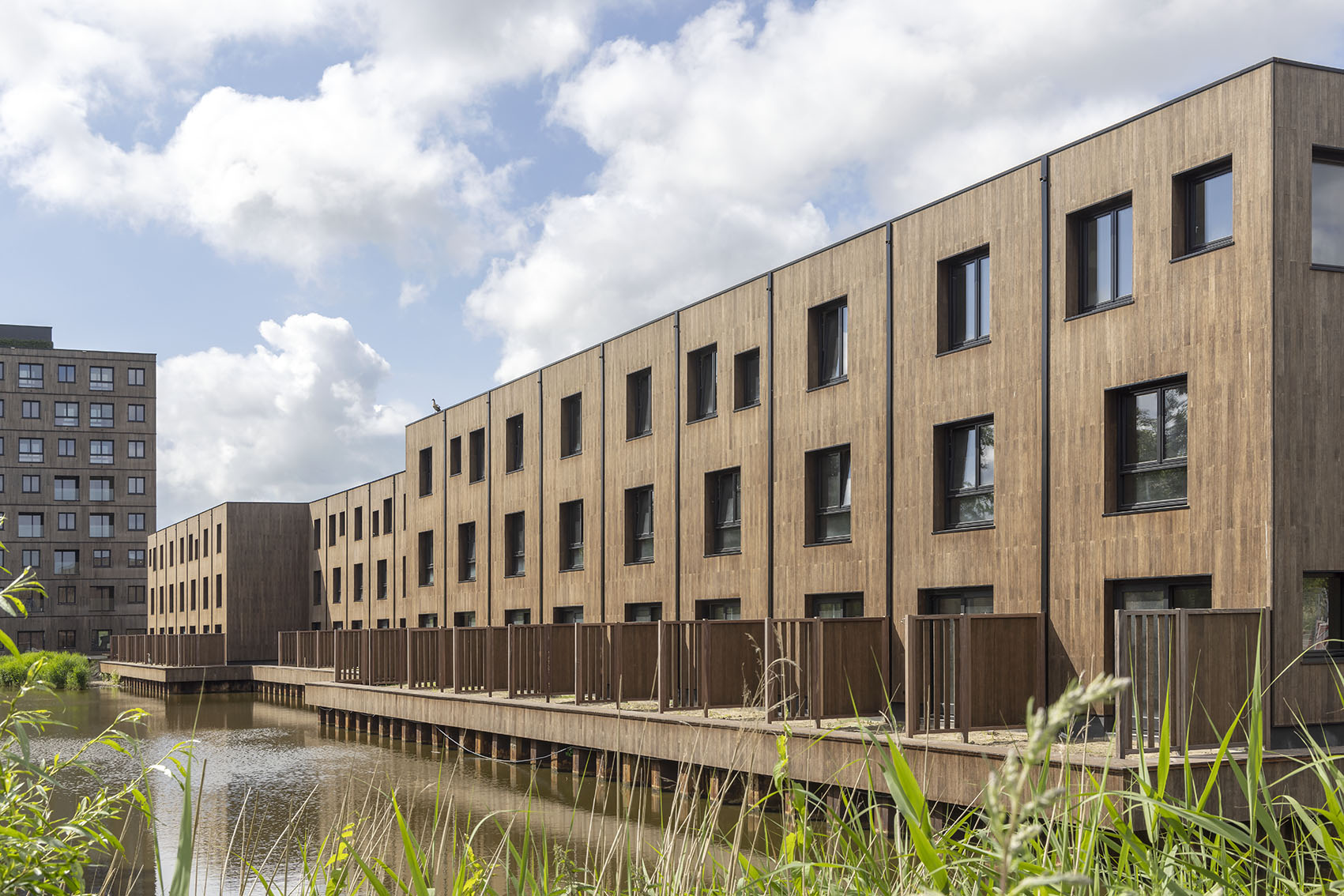
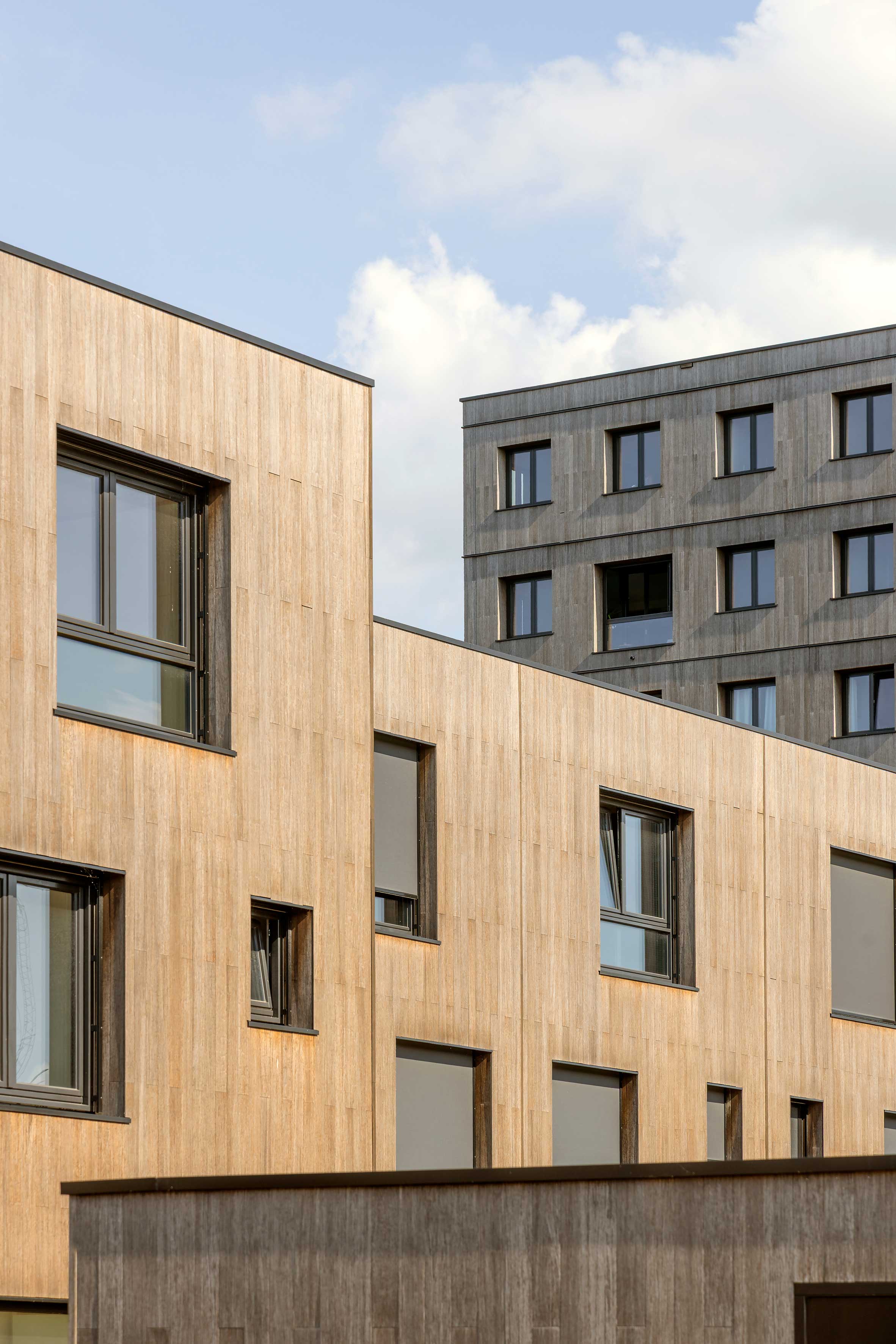
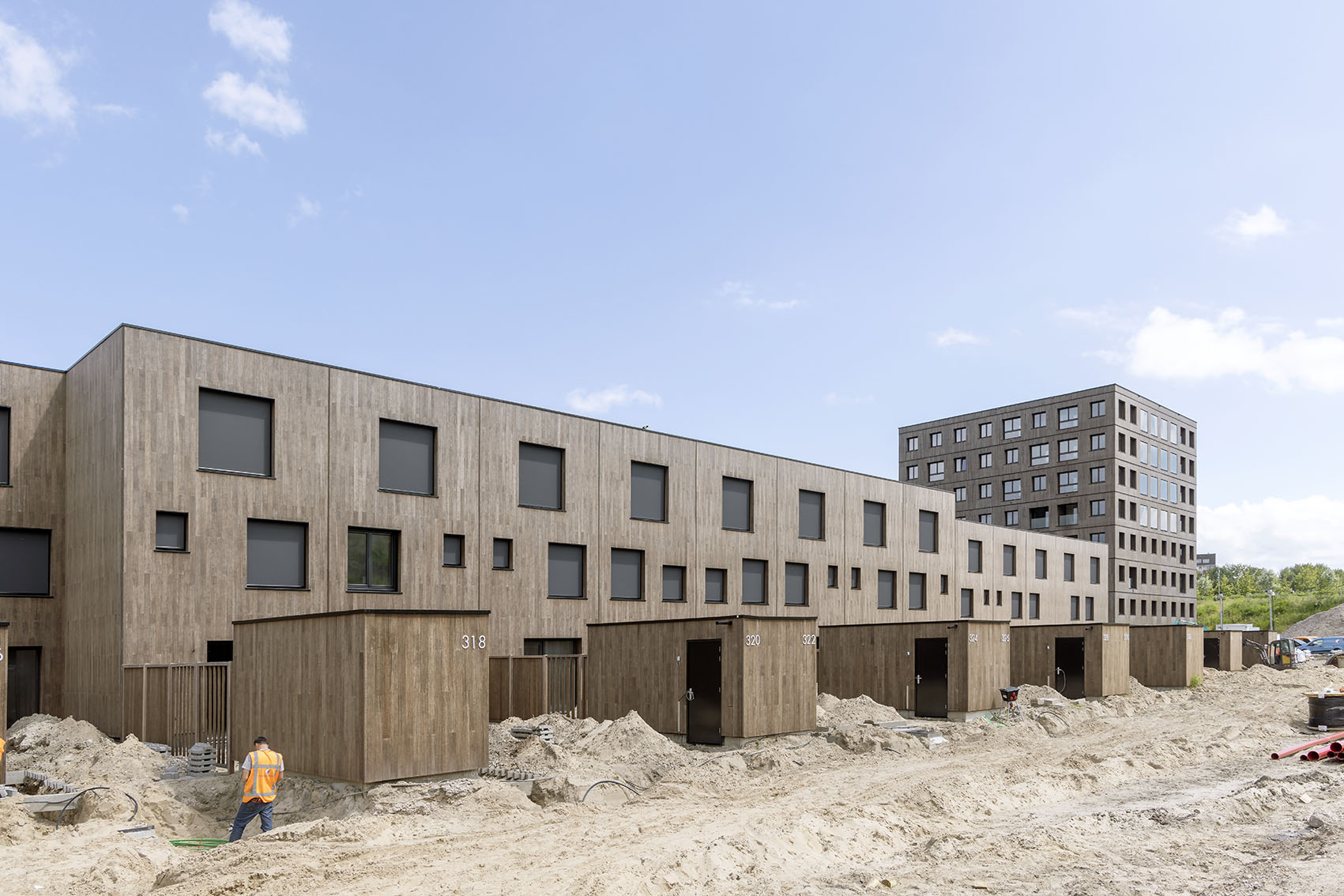
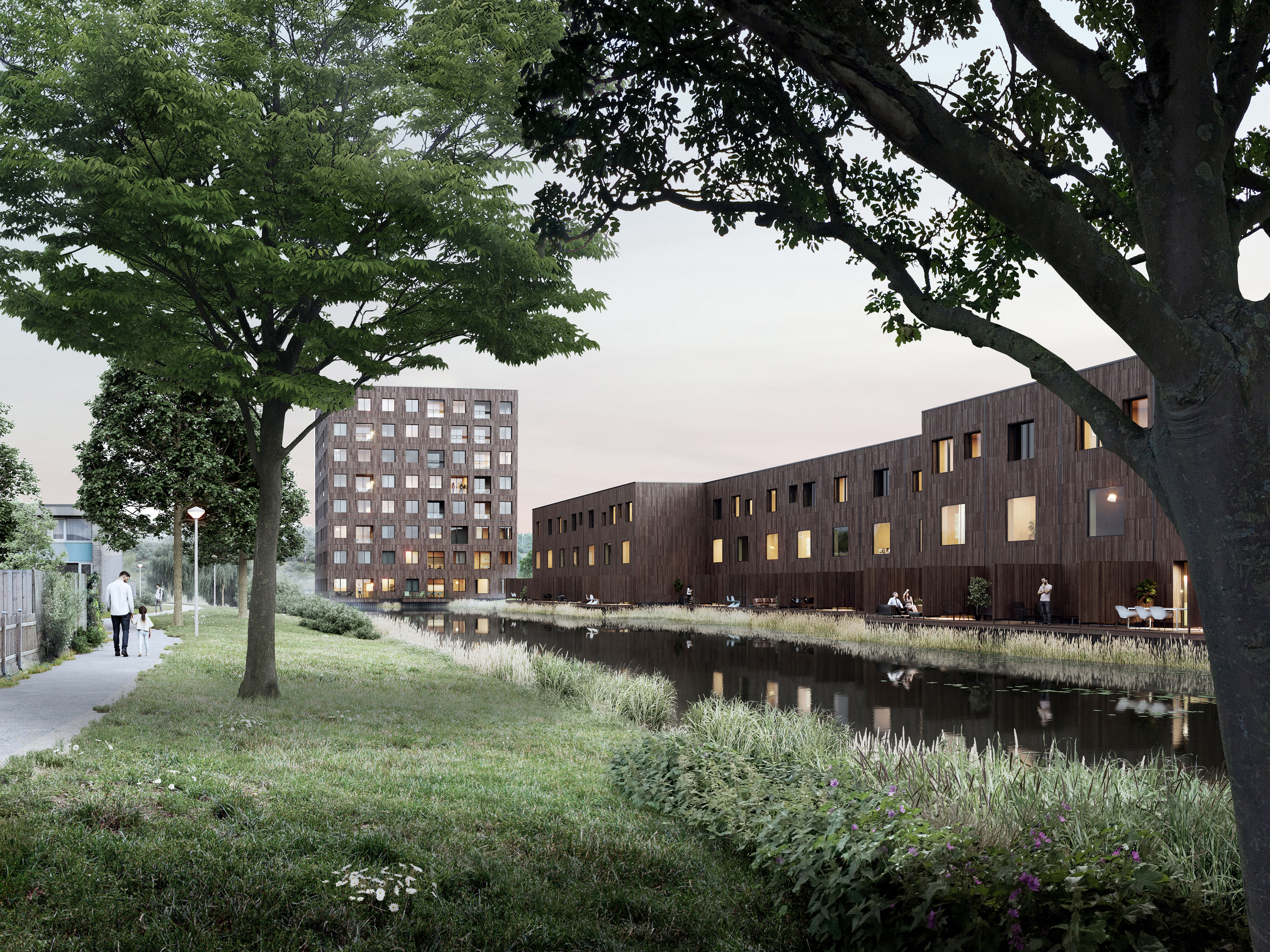
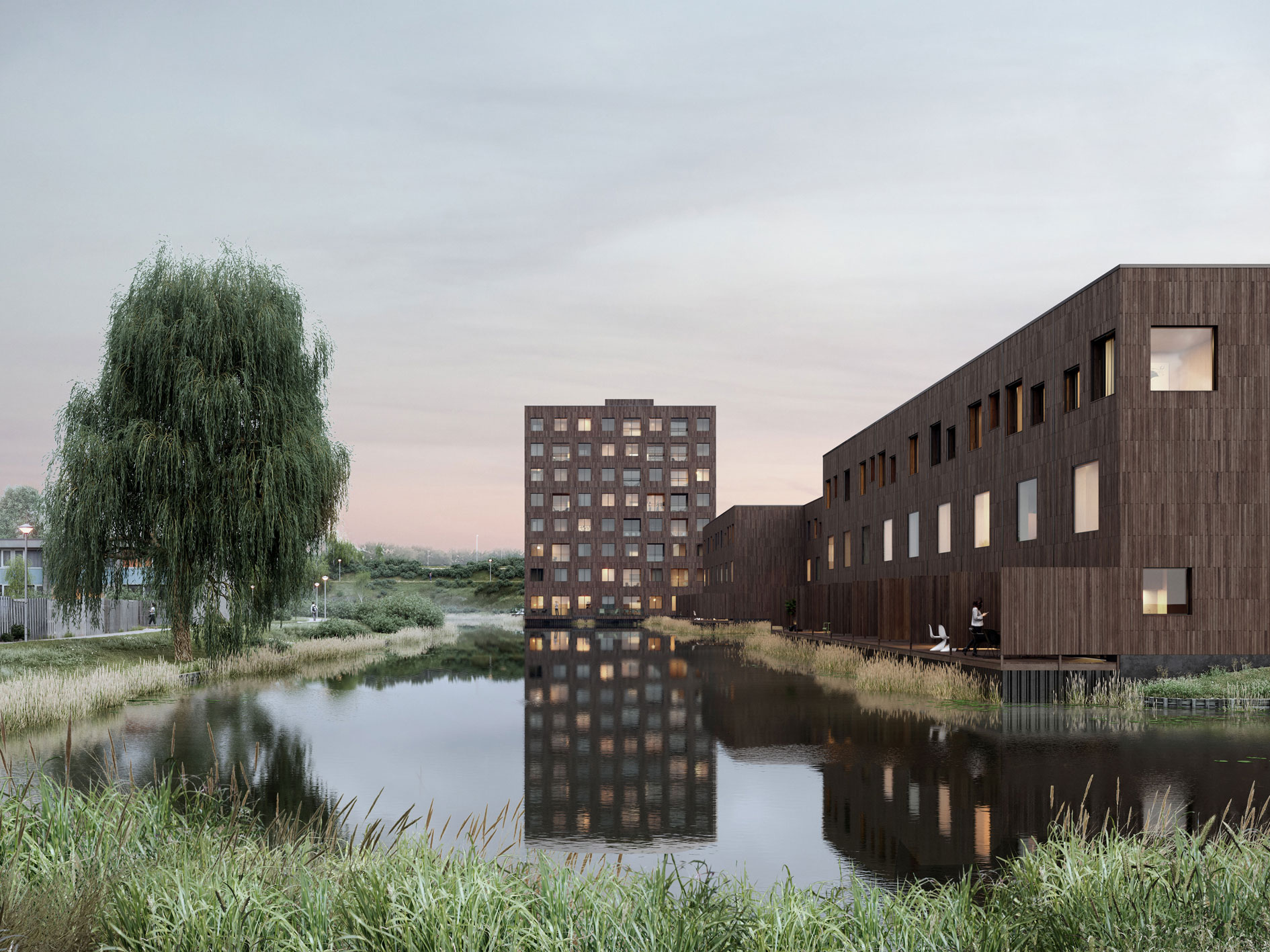
By placing the new homes on the opposite side of the existing canal, the water becomes not a barrier but an integral and connecting part of the neighbourhood. The low-rise follows the typology of the original strip development, with subtle shifts between the volumes, creating a balance between collective unity and individual identity. In this way, a natural and respectful urban dialogue emerges between old and new.
At a larger scale, the project is part of a major transformation linked to the construction of the Gaasperdammertunnel. Where the site was previously dominated by the busy A9 motorway, the tunnel has largely removed traffic from sight and sound. The Brasapark, built on top of the tunnel, now connects the Nelson Mandela Park and the Gaasperplas, and thereby also the neighbourhoods of Bijlmermeer and Gaasperdam.
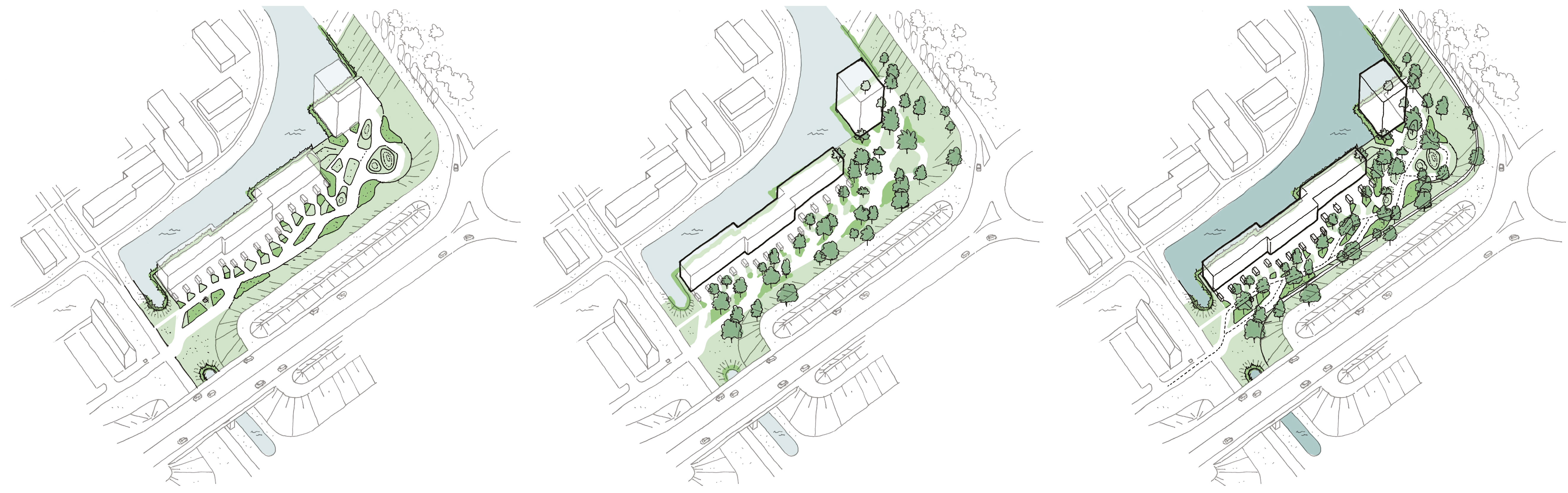
Switi forms the green link between these parks and acts as a catalyst within this transformation. In collaboration with the urban design department of the City of Amsterdam, the public realm has been designed around the credo ‘living in a park’, with rich planting for birds, bats and insects, and with the car as guest. In this new context, the residential tower is a modest yet distinctive landmark that visually connects the neighbourhoods on either side of the park.
Through an integrated approach to landscape, architecture and construction technology, Switi responds to the sustainability ambitions of our time. At the same time, the project aligns with the ideals of modernism on which the original neighbourhood is based, through the use of industrial building methods and contemporary materials.
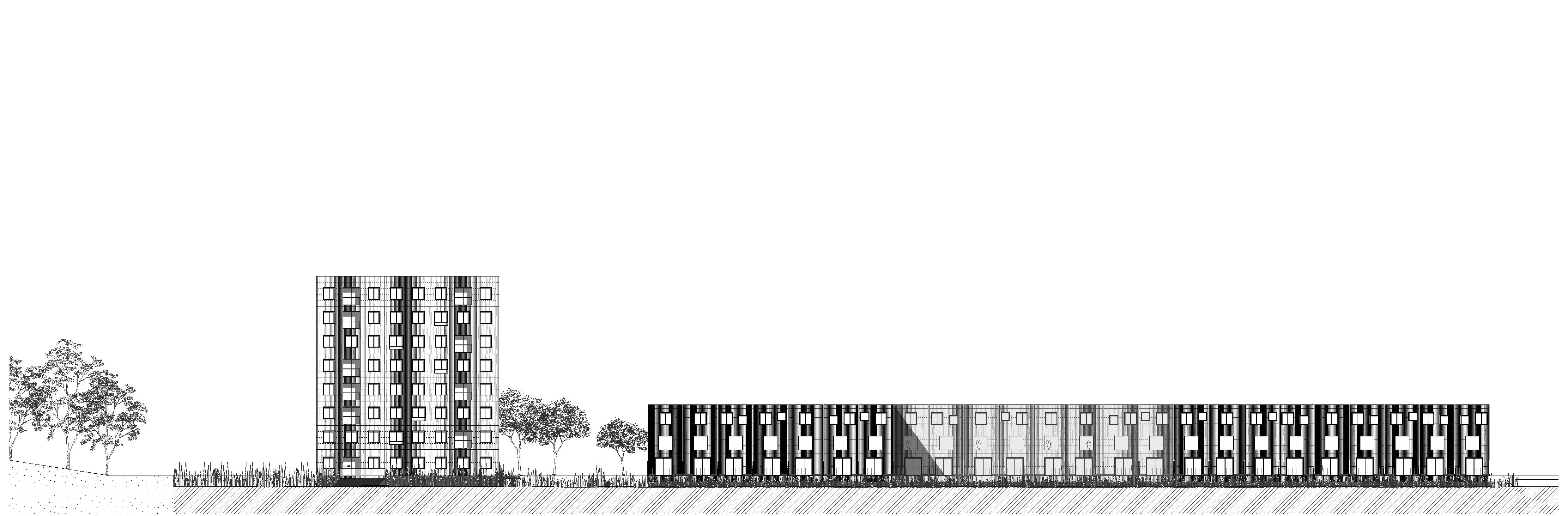
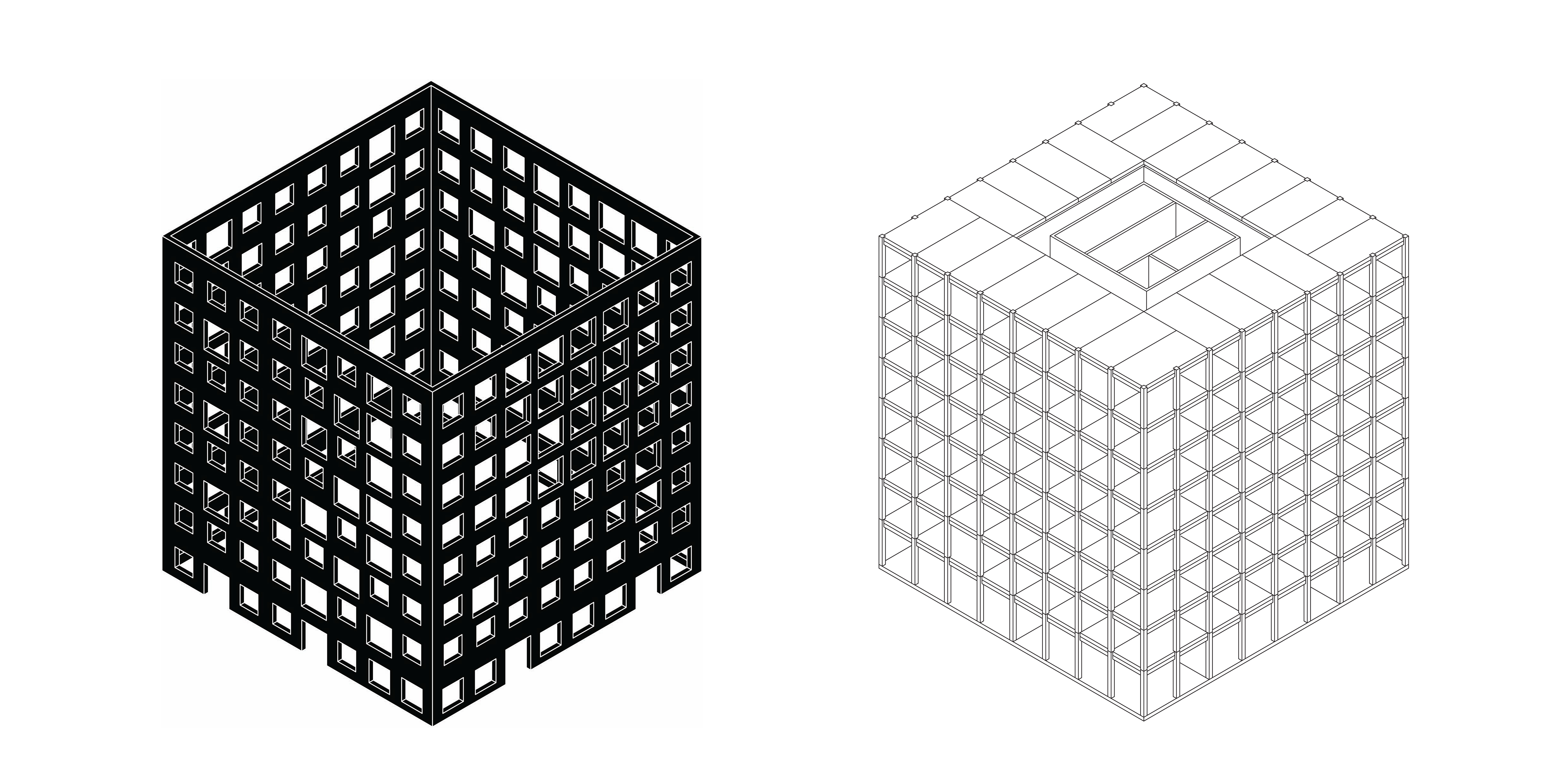
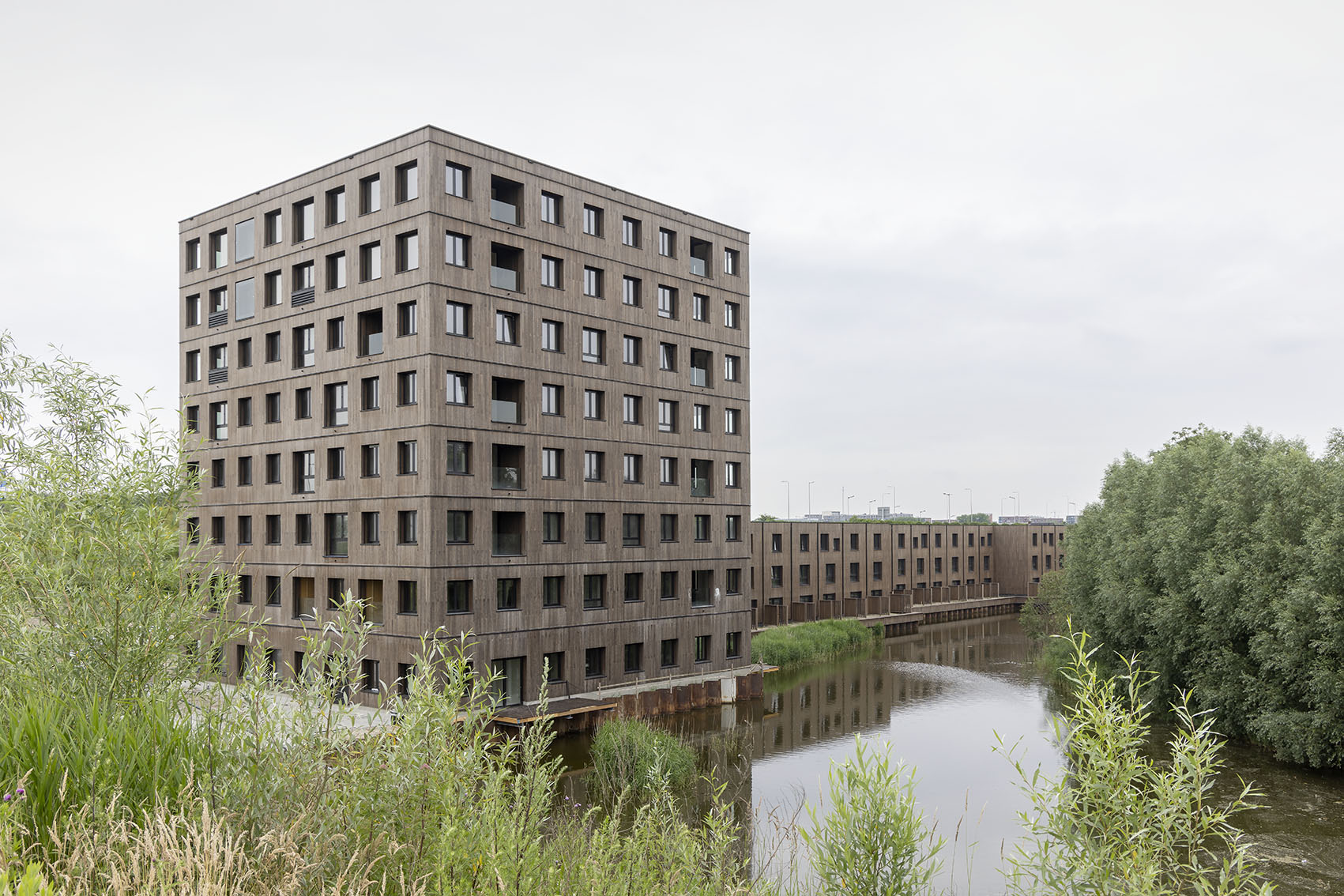
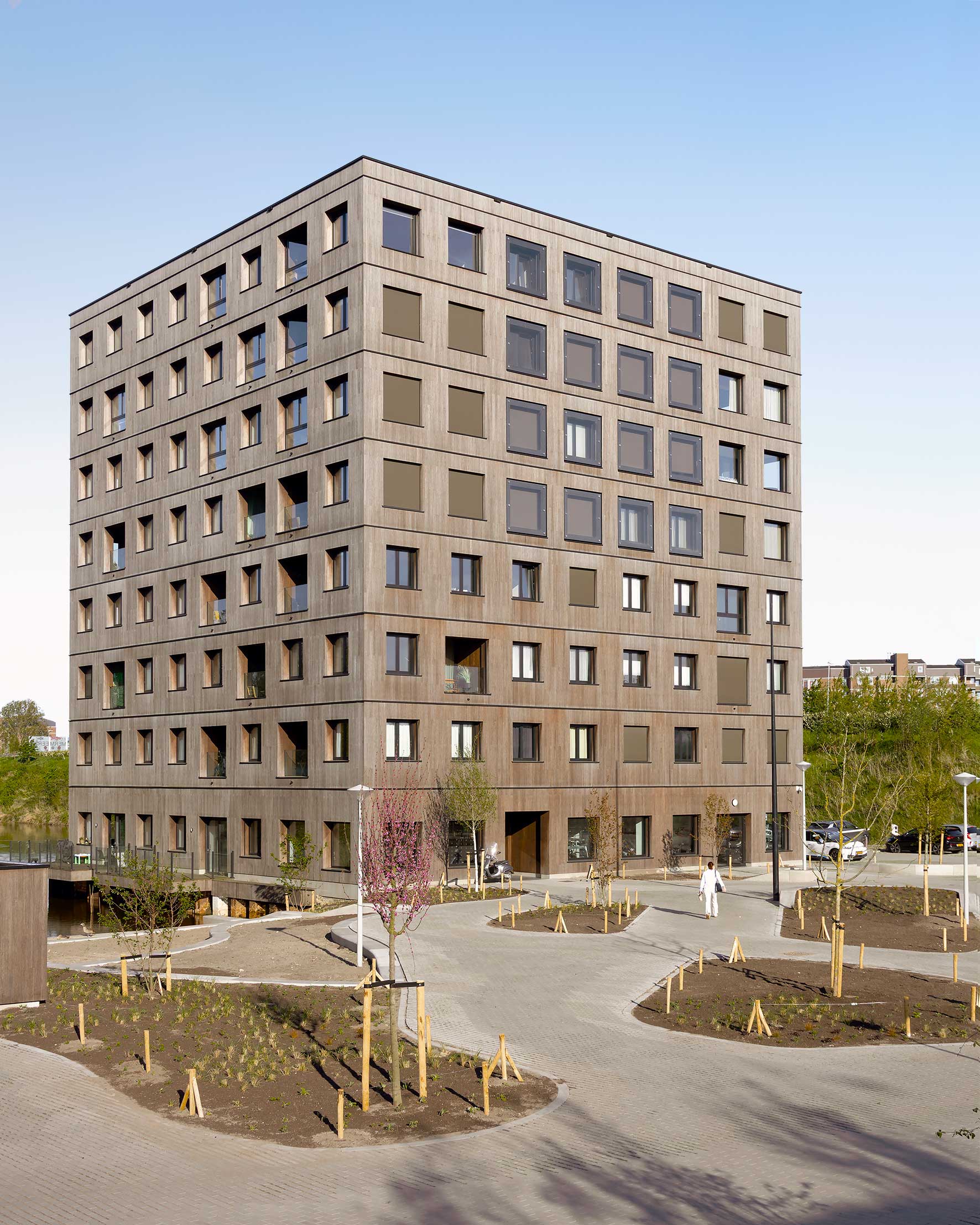
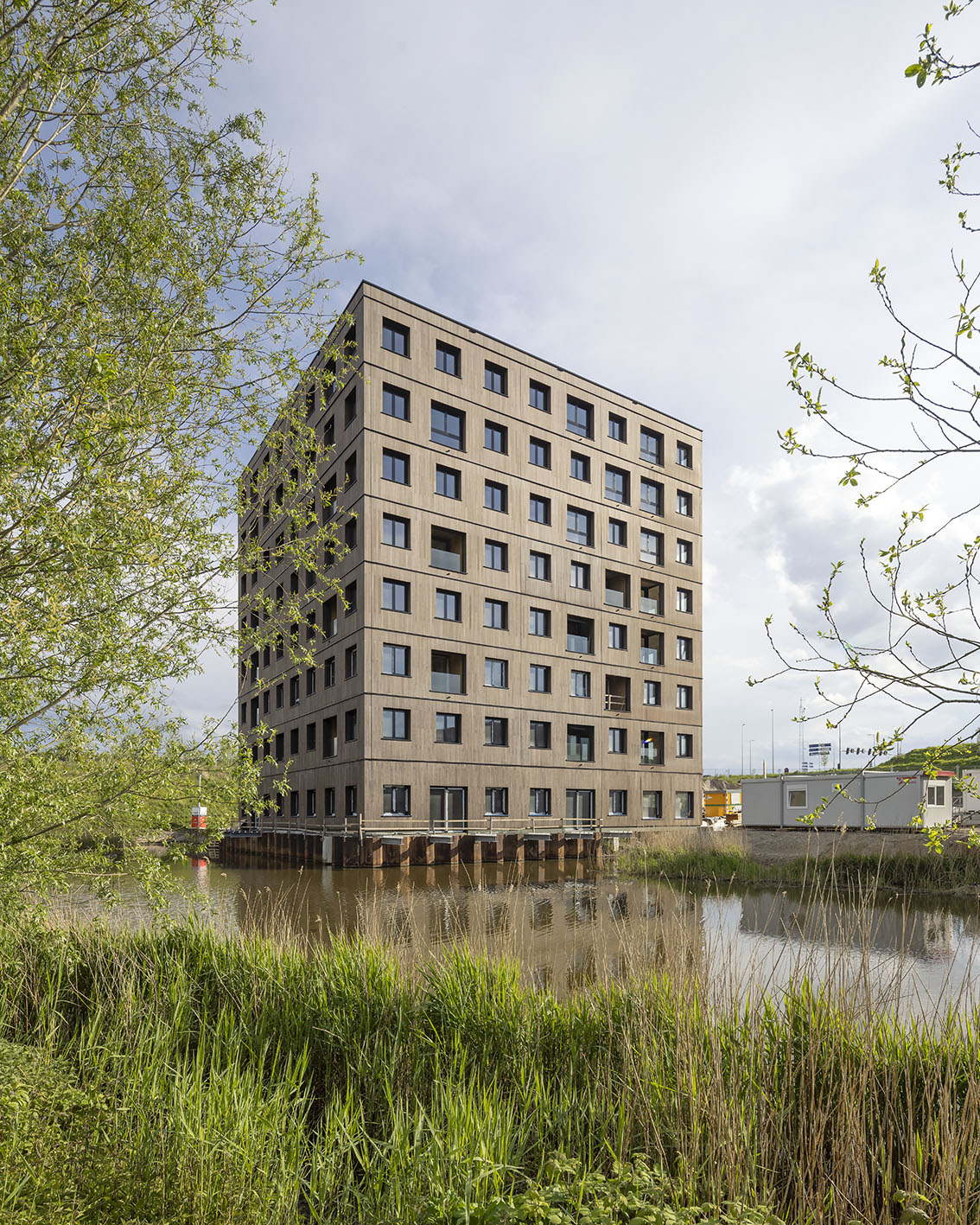
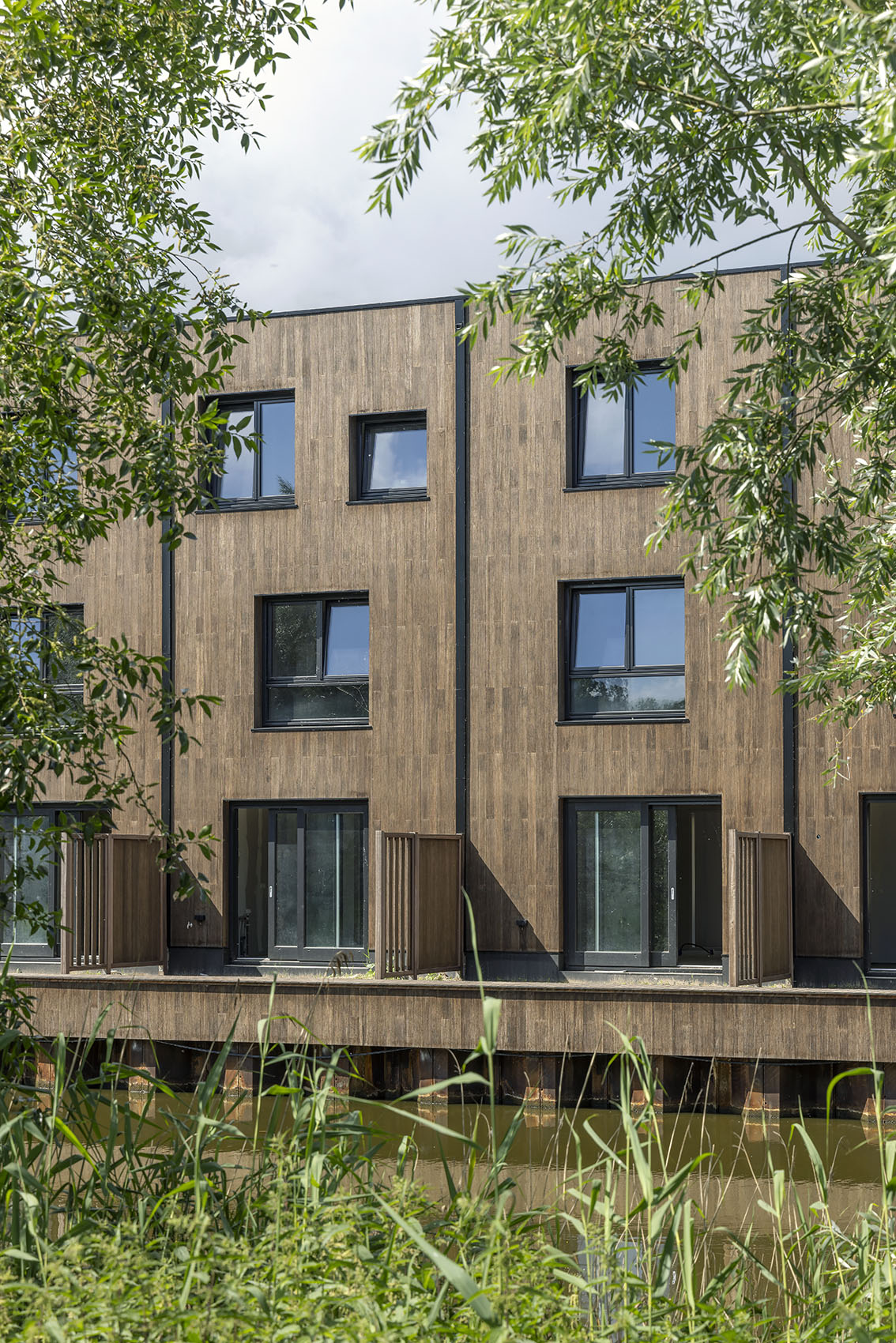
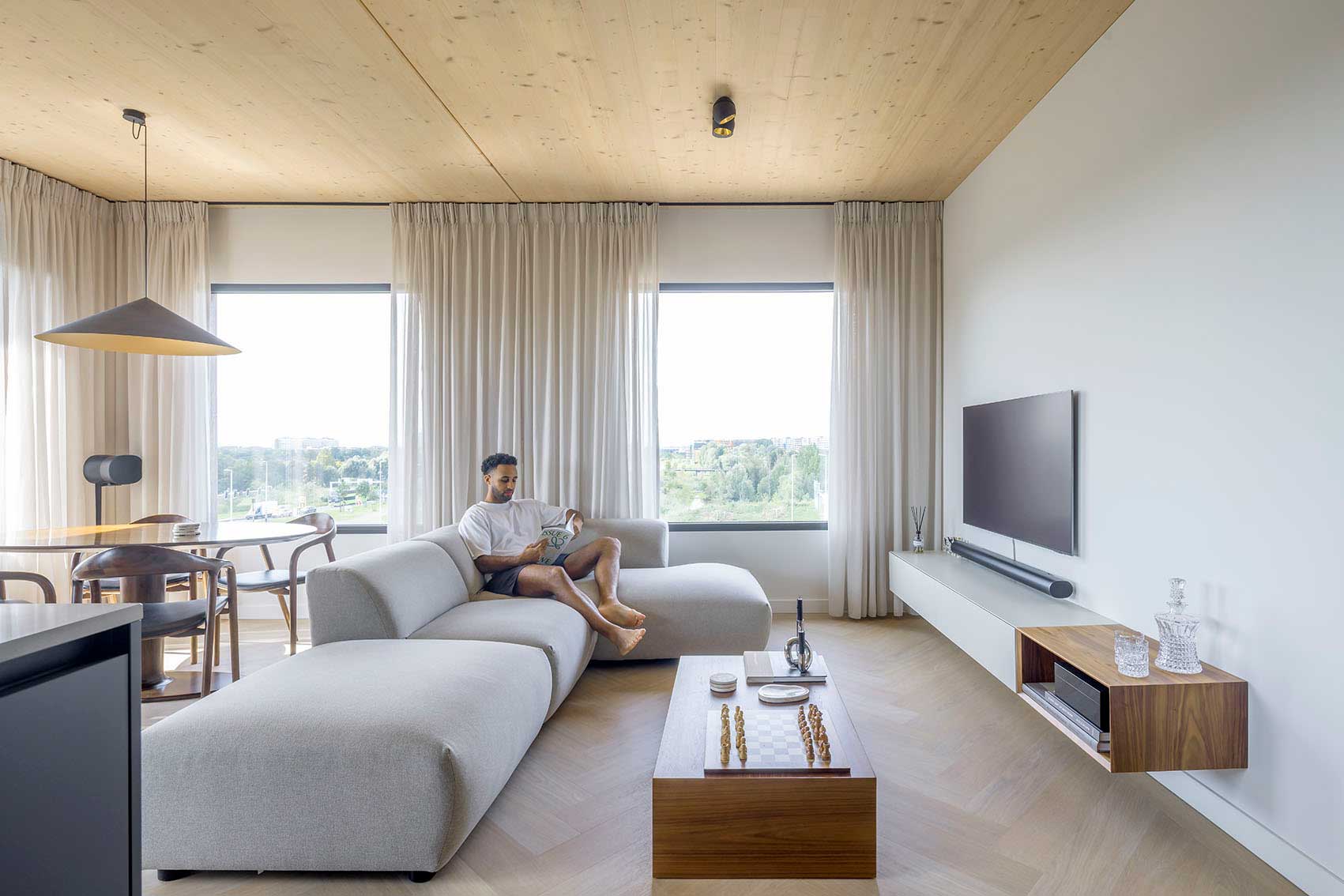
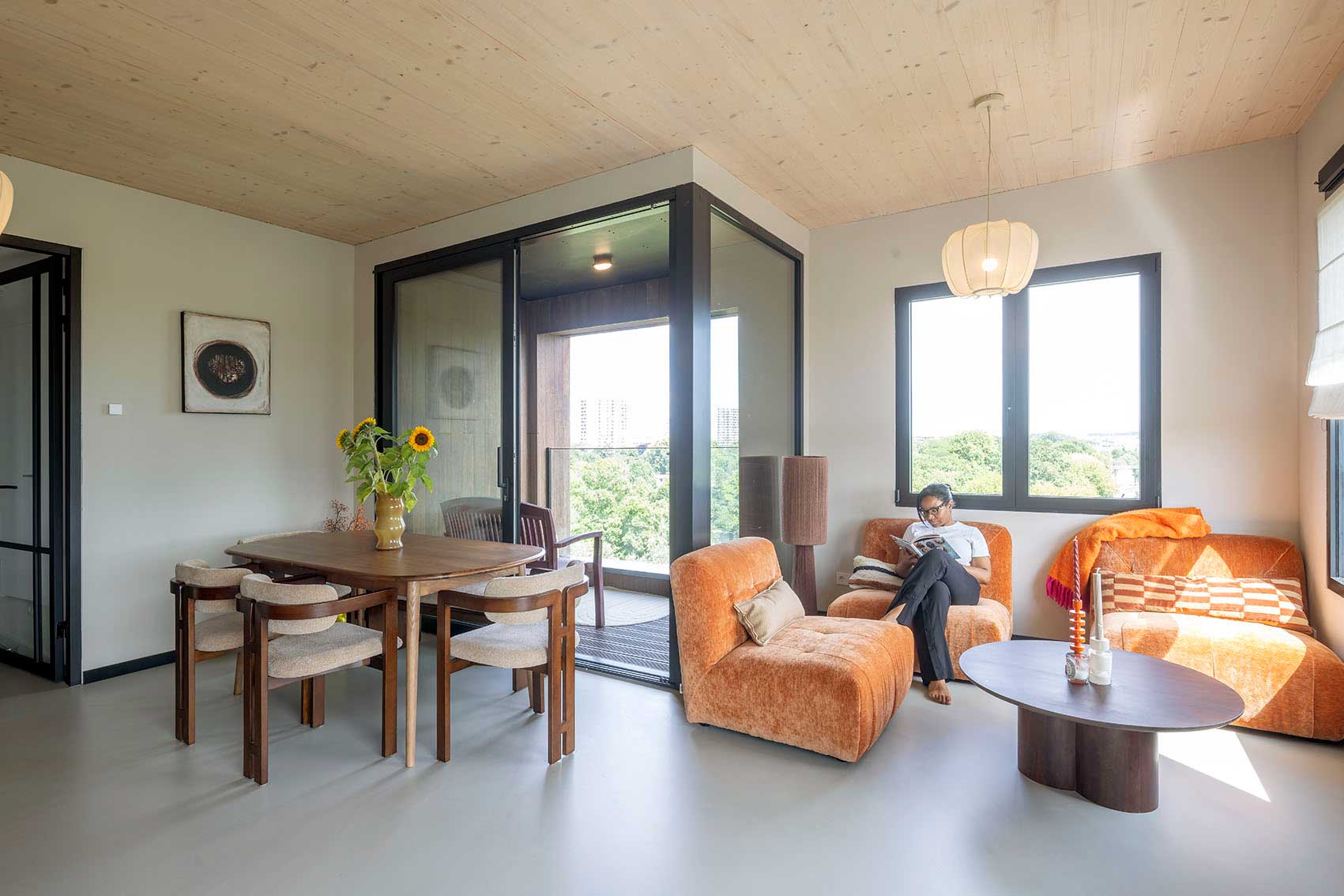
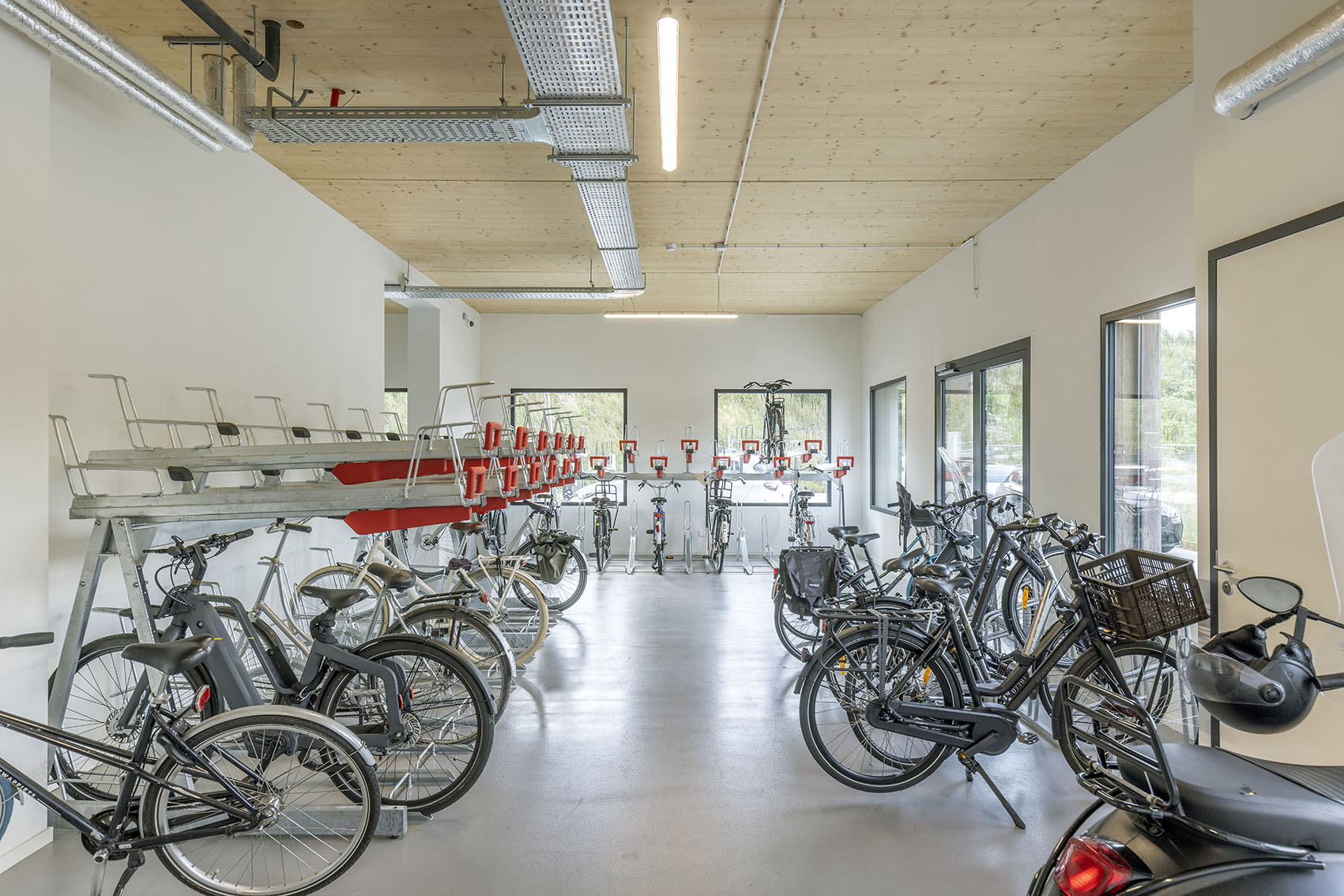
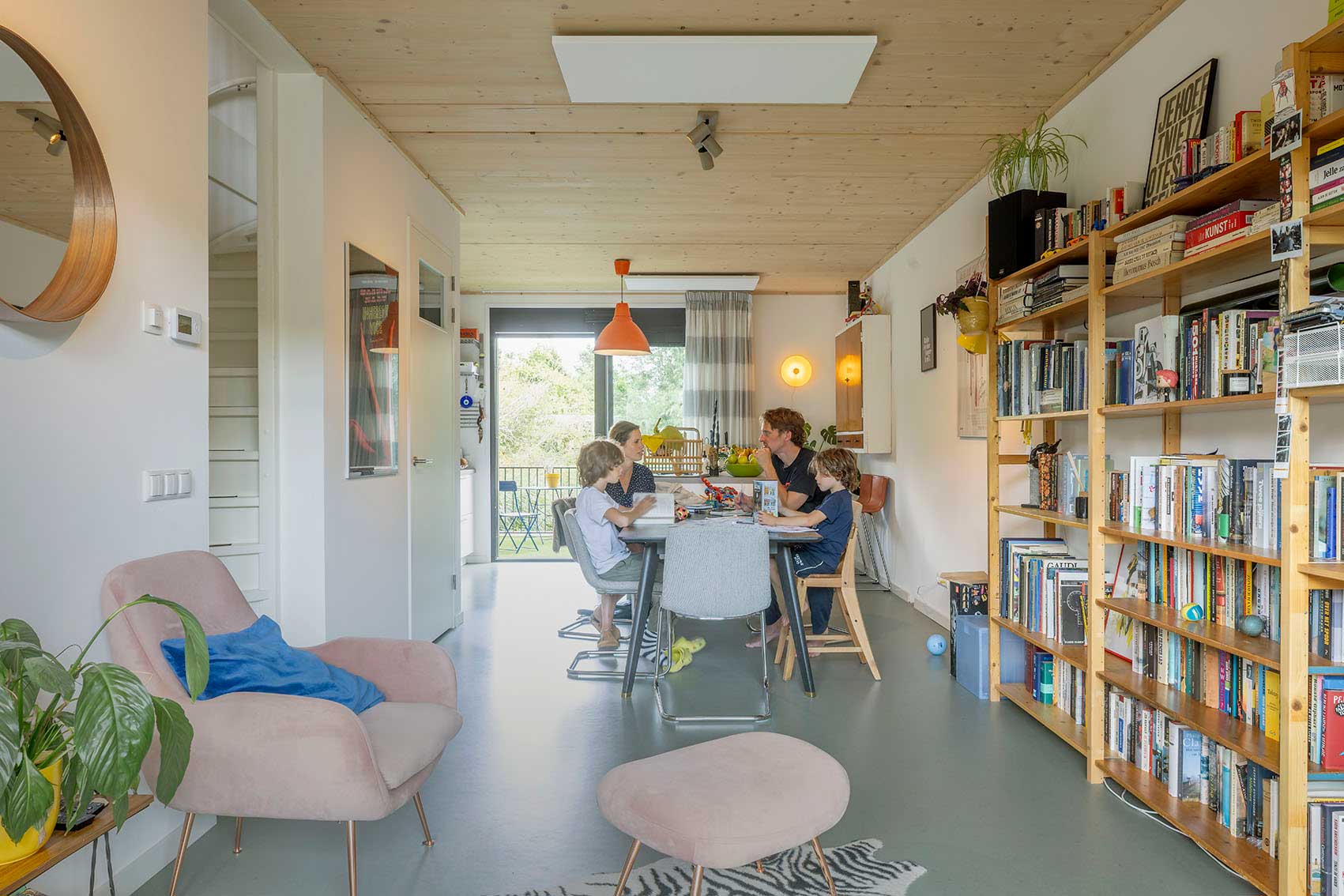
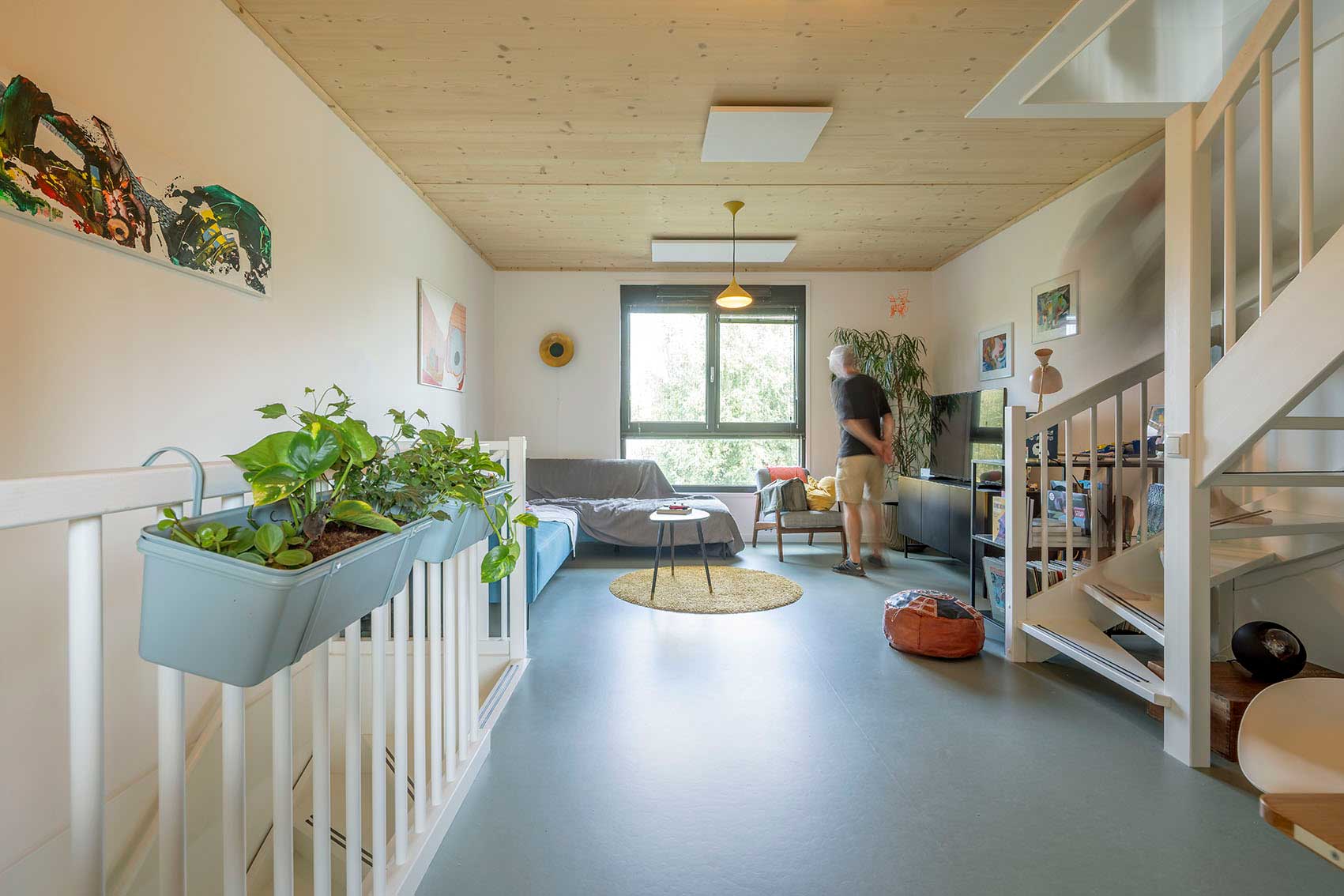
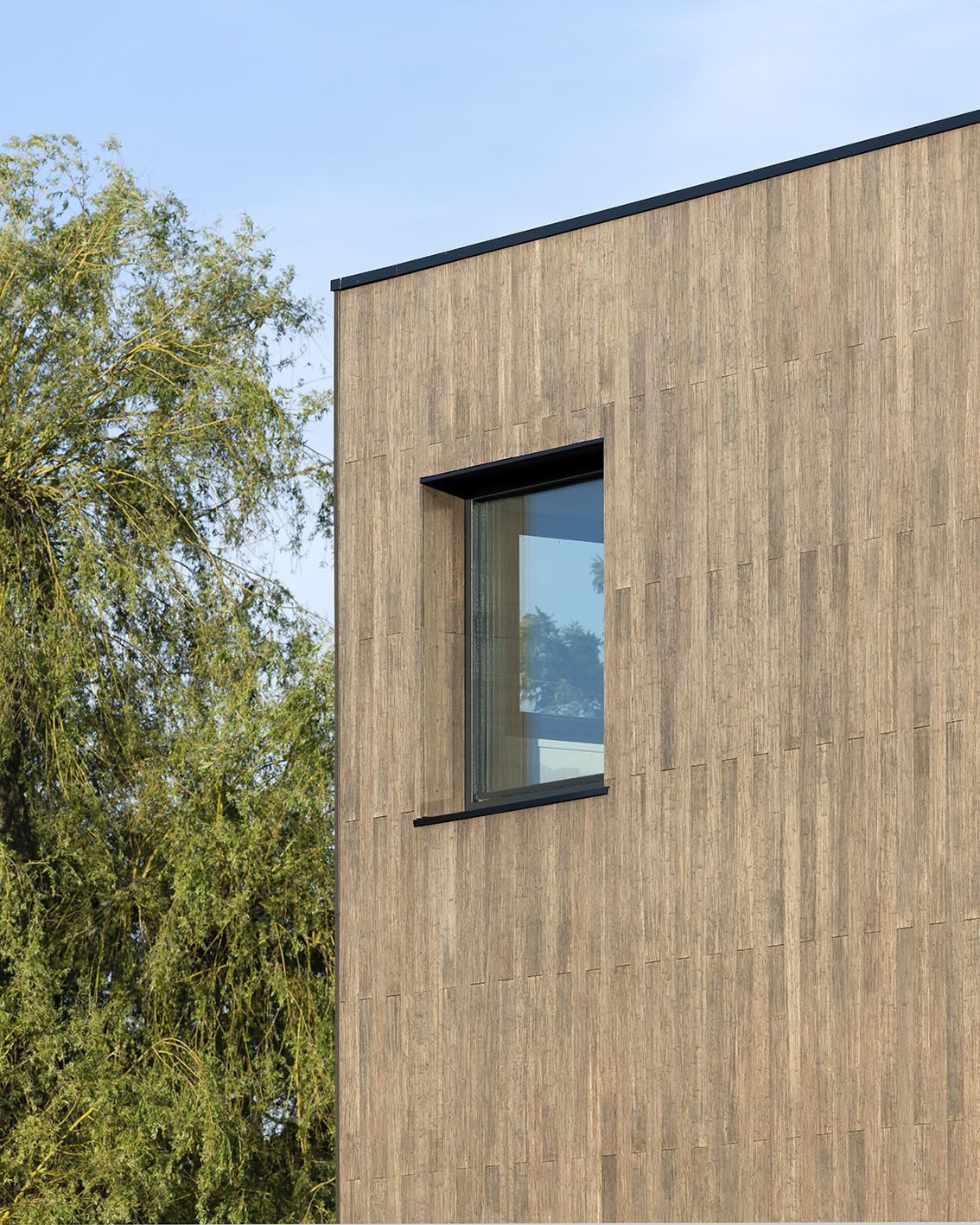
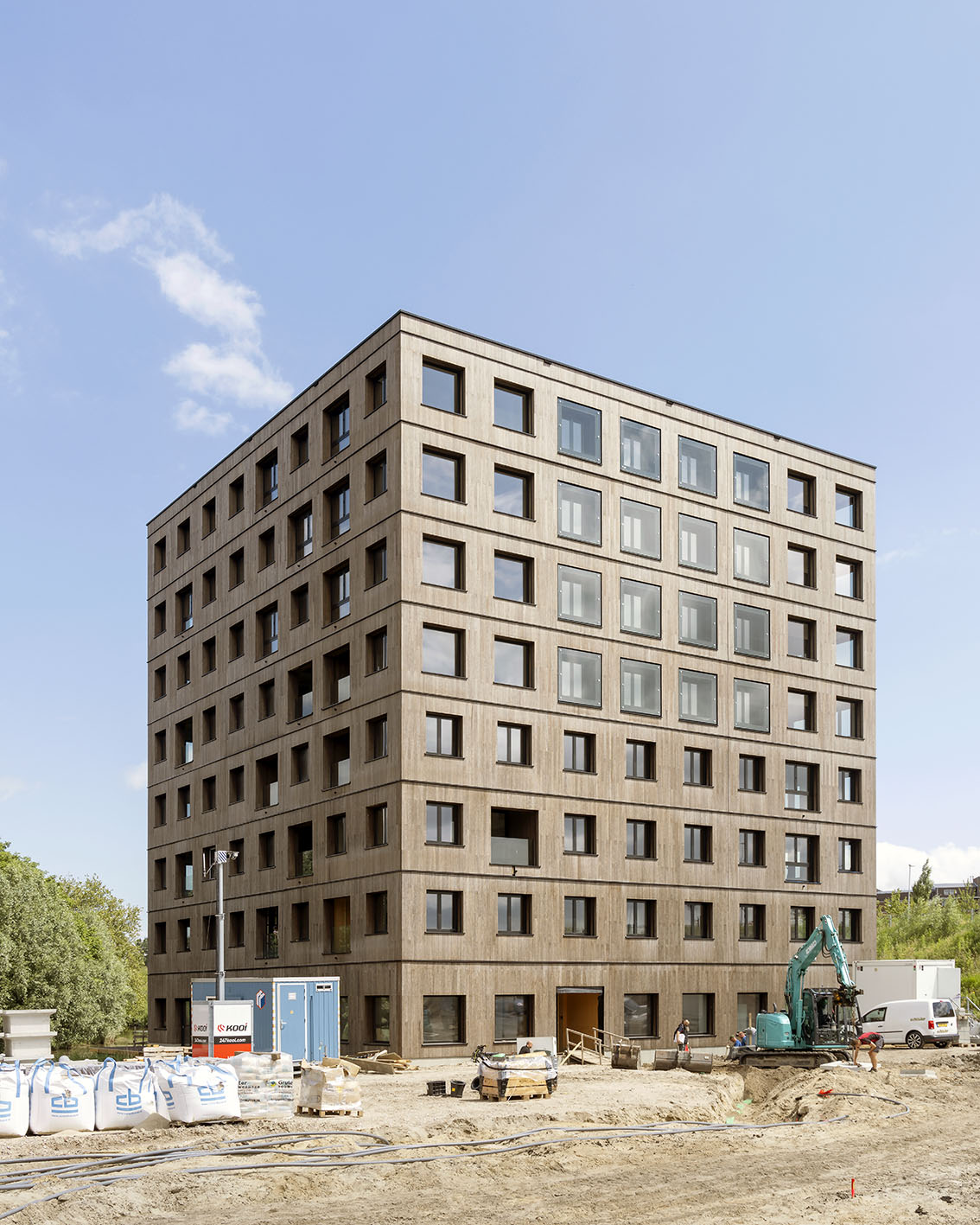
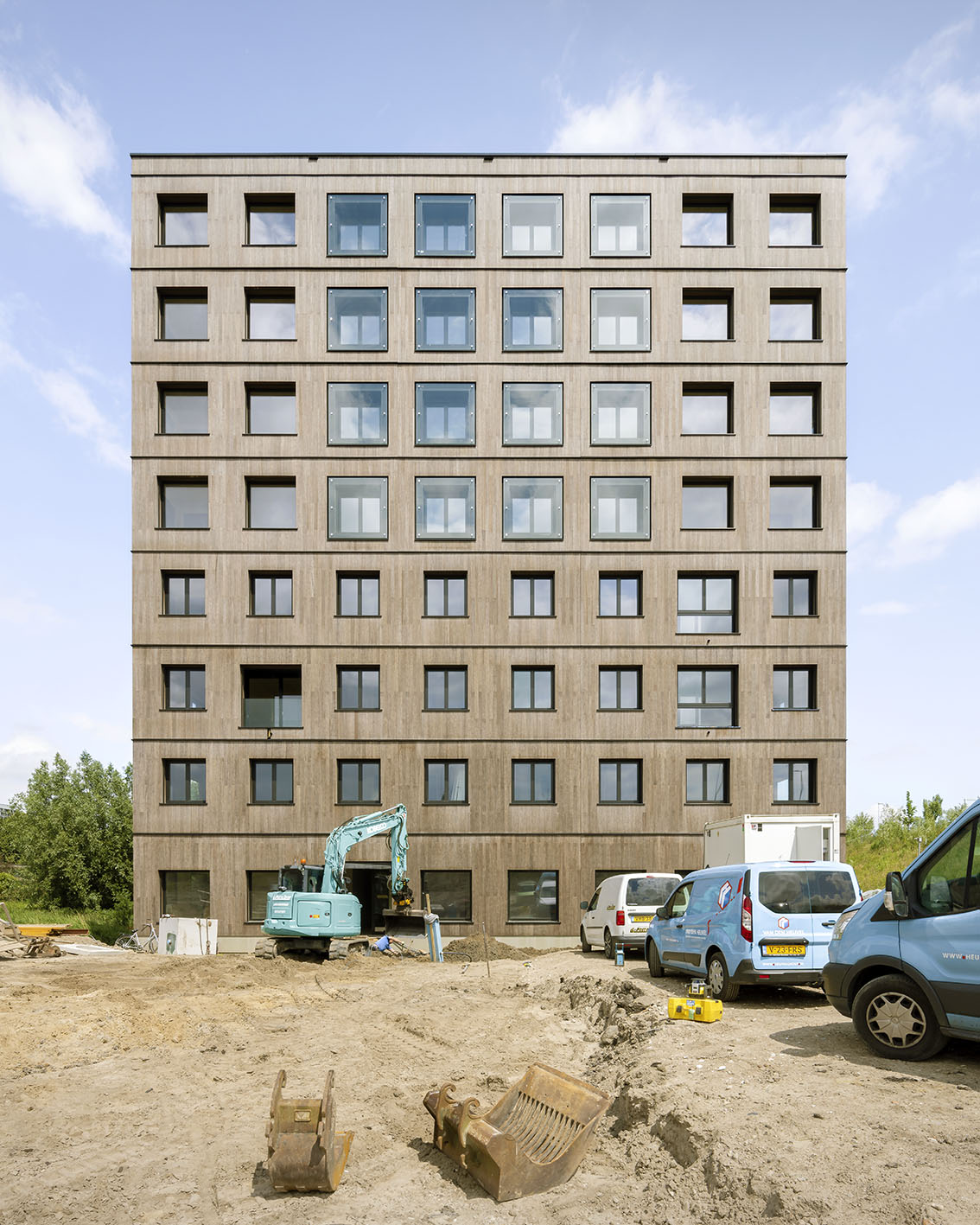
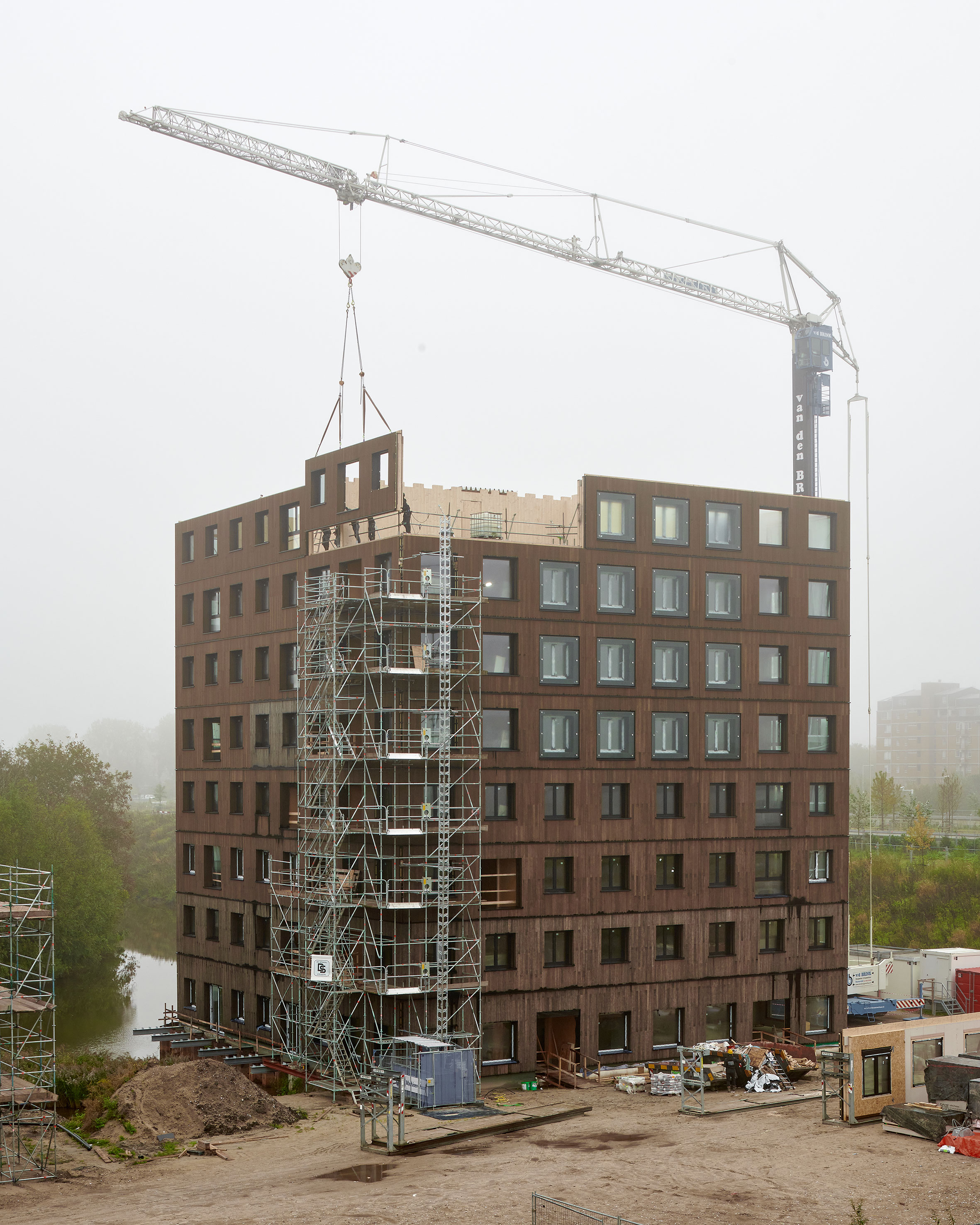
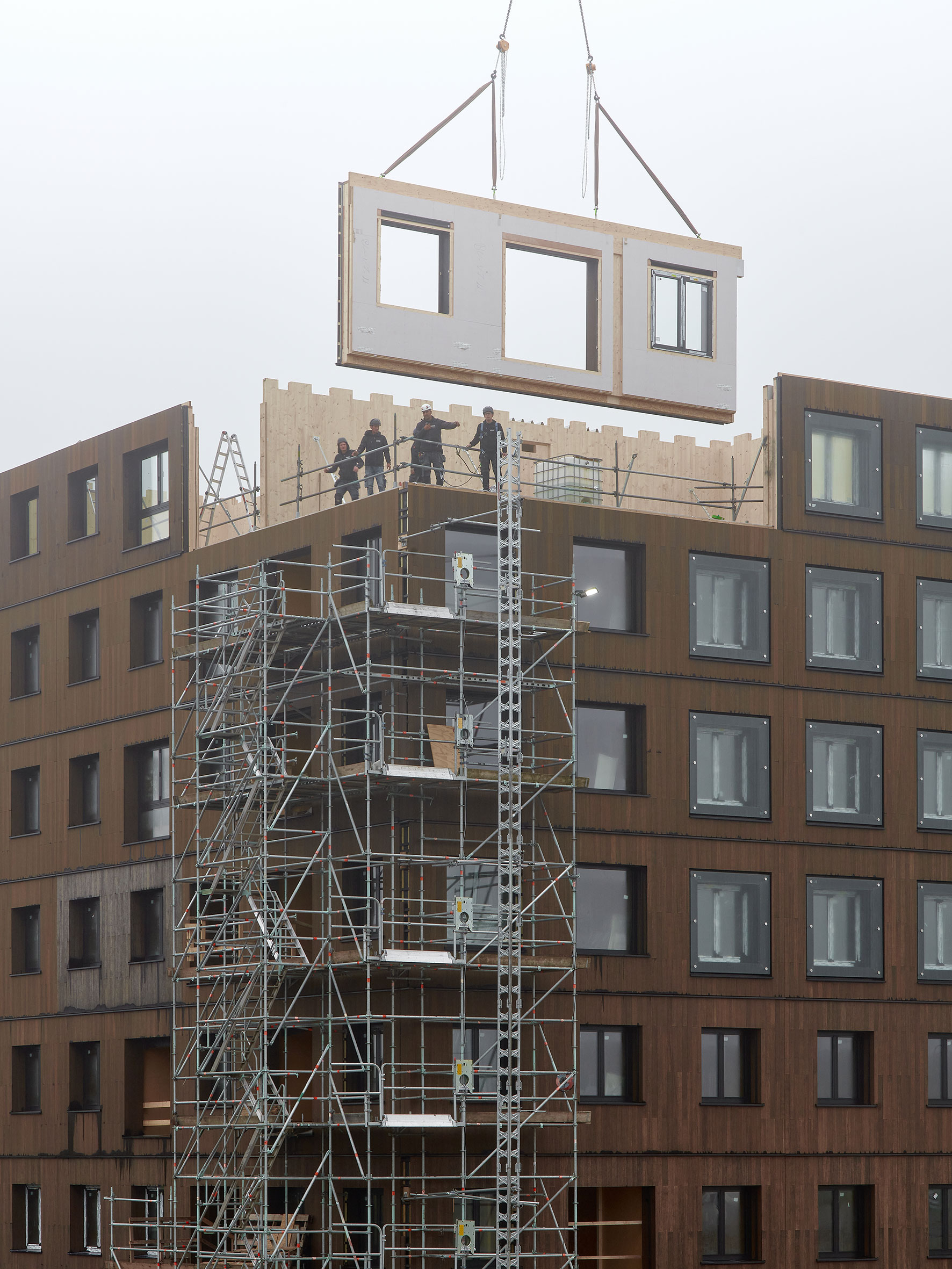
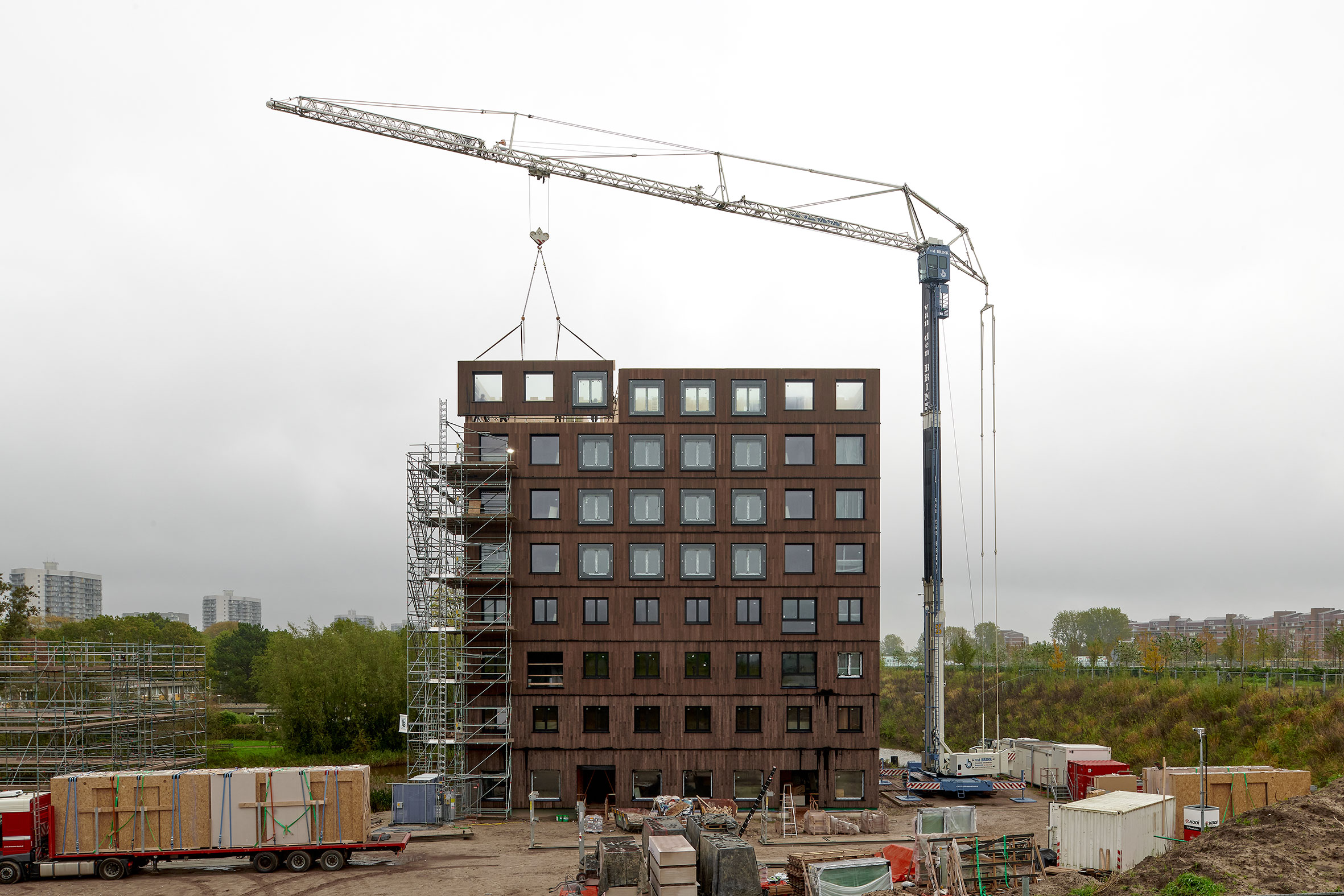
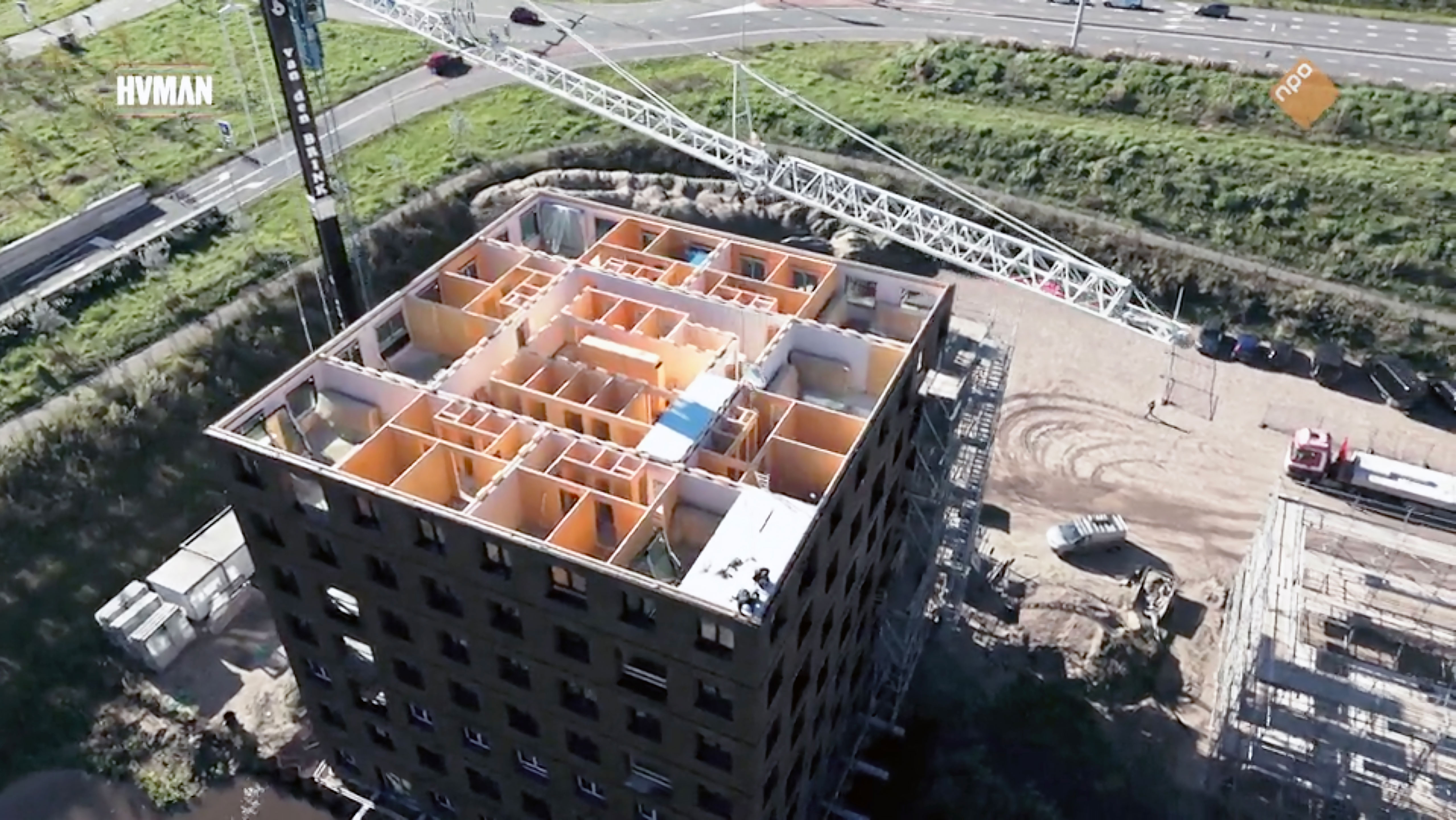
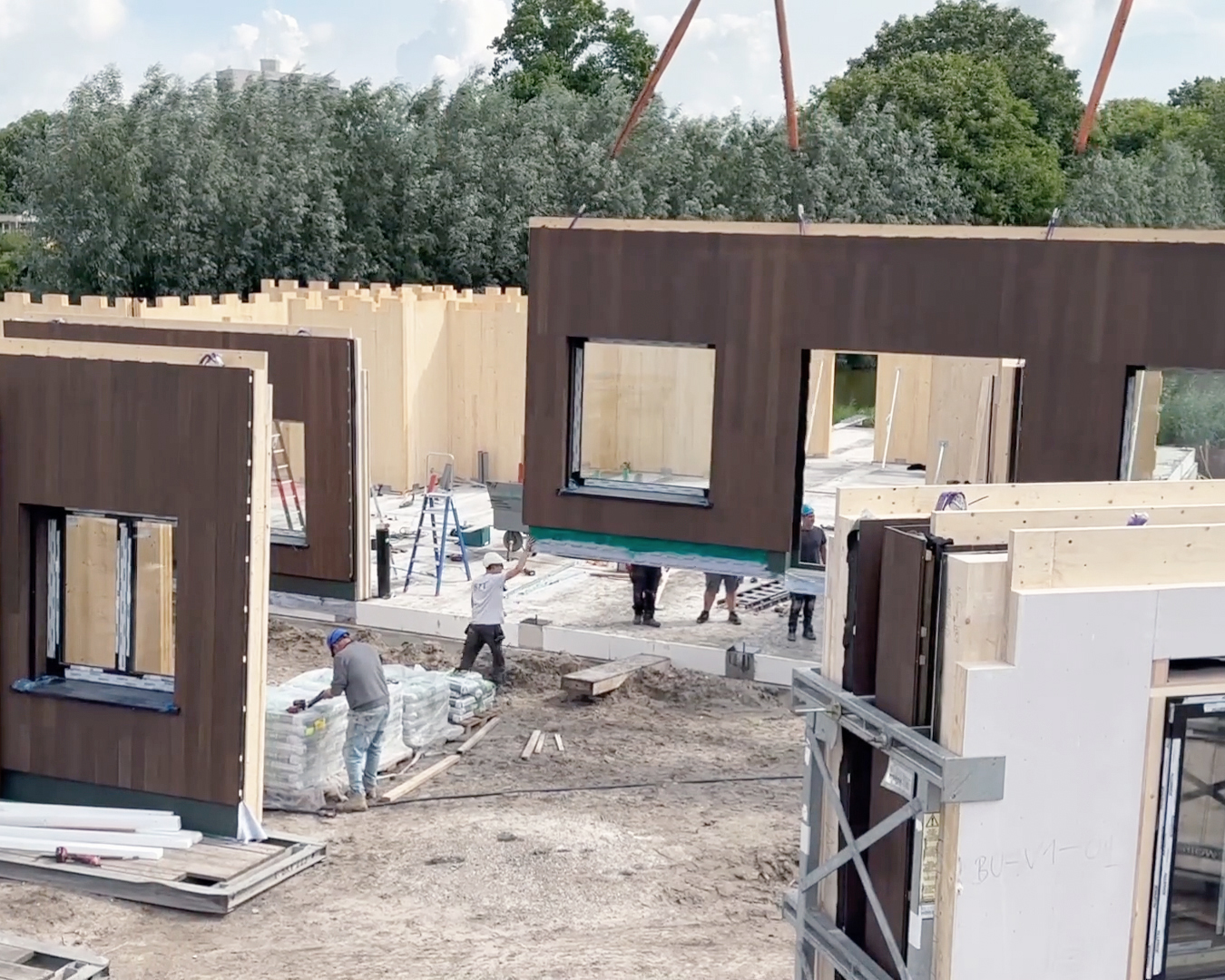
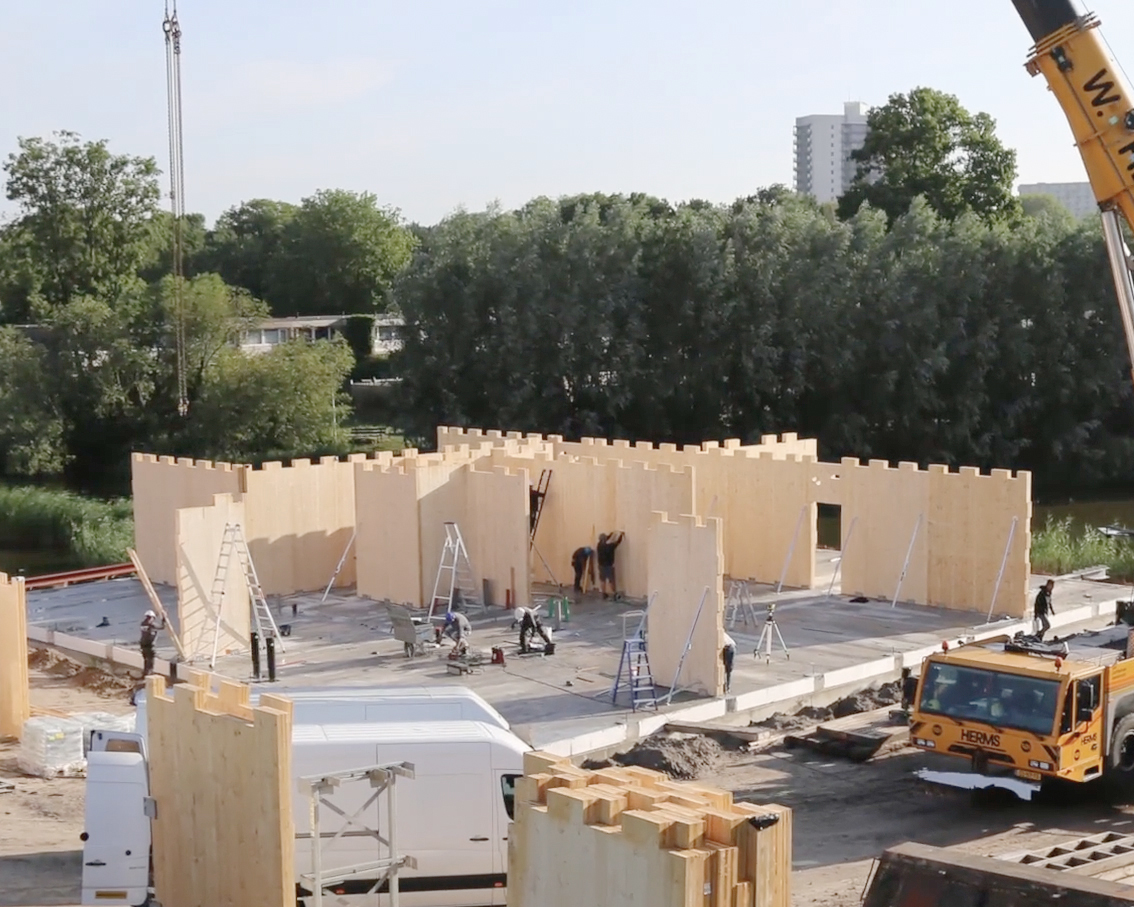
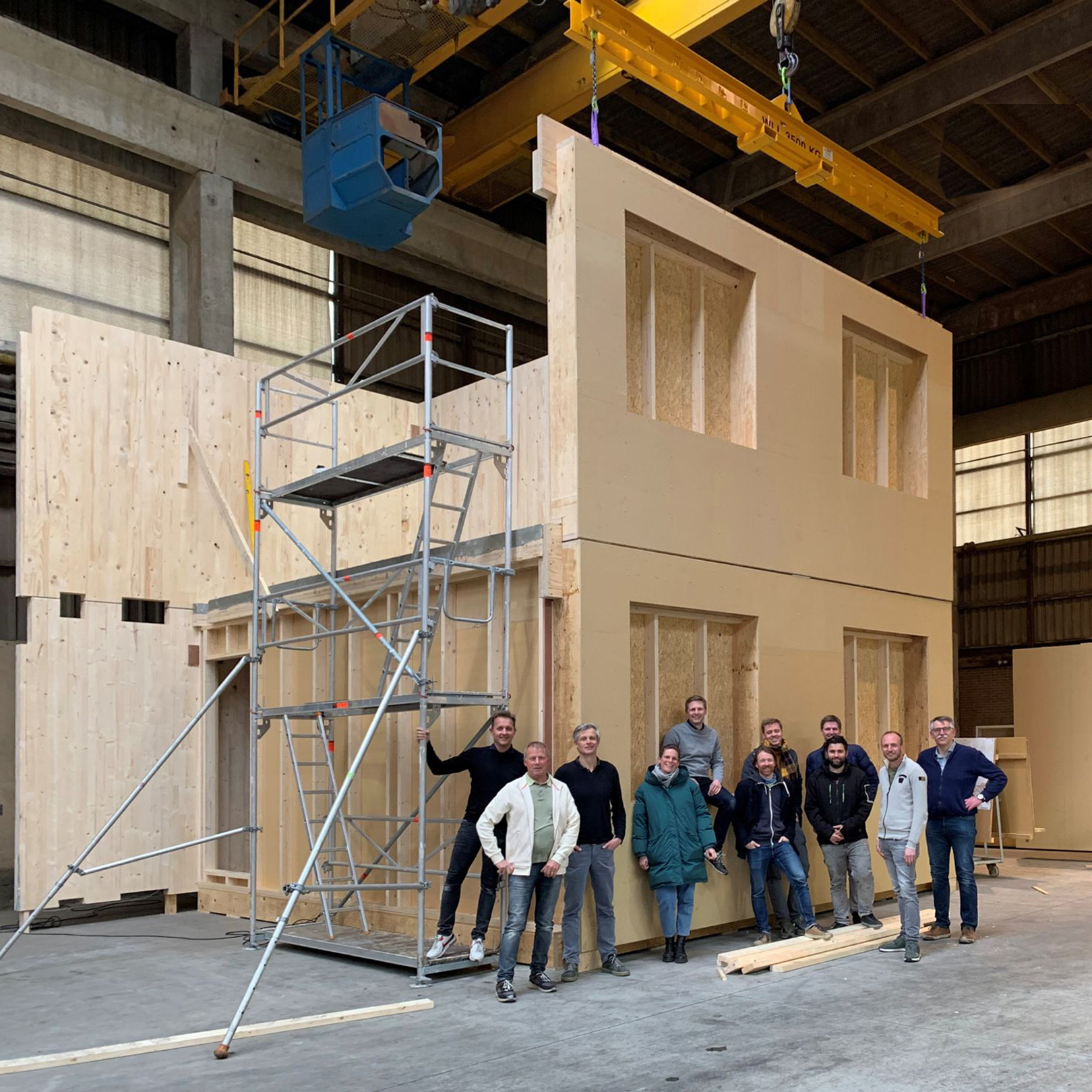
Apart from the foundations, Switi is entirely biobased. Unique in the Netherlands is the construction of the tower, in which the load-bearing walls, staircase, floors and core are built from solid cross-laminated timber (CLT). The façades are insulated with wood fibre and clad in bamboo.
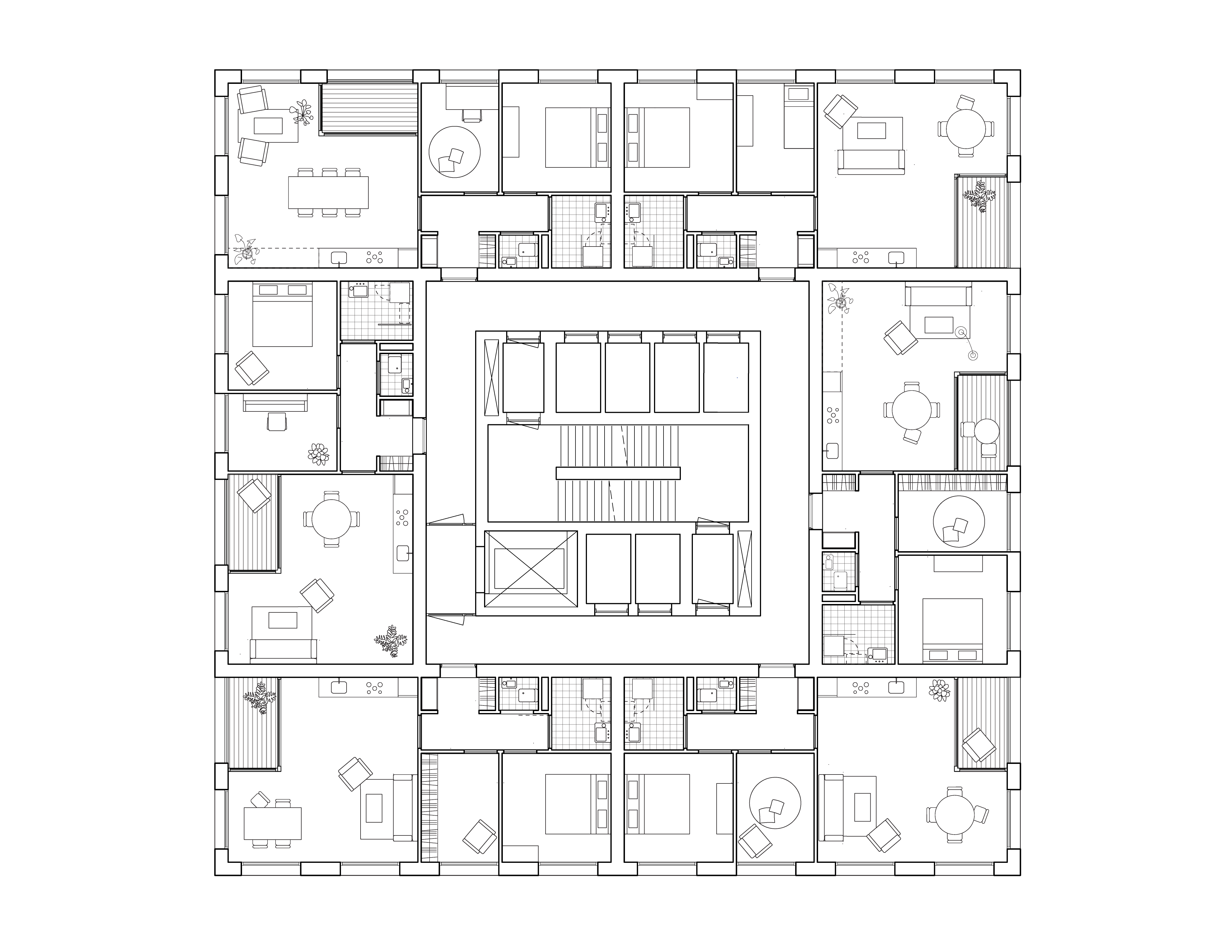
The architectural unity between the low-rise and the tower is reinforced by a consistent façade design with a pattern of square window openings and loggias. This pattern plays with the principle of ‘rule and exception’. As the tower is designed on all sides and located at a crossing of park and road, it can respond specifically to varying requirements for noise and ventilation.
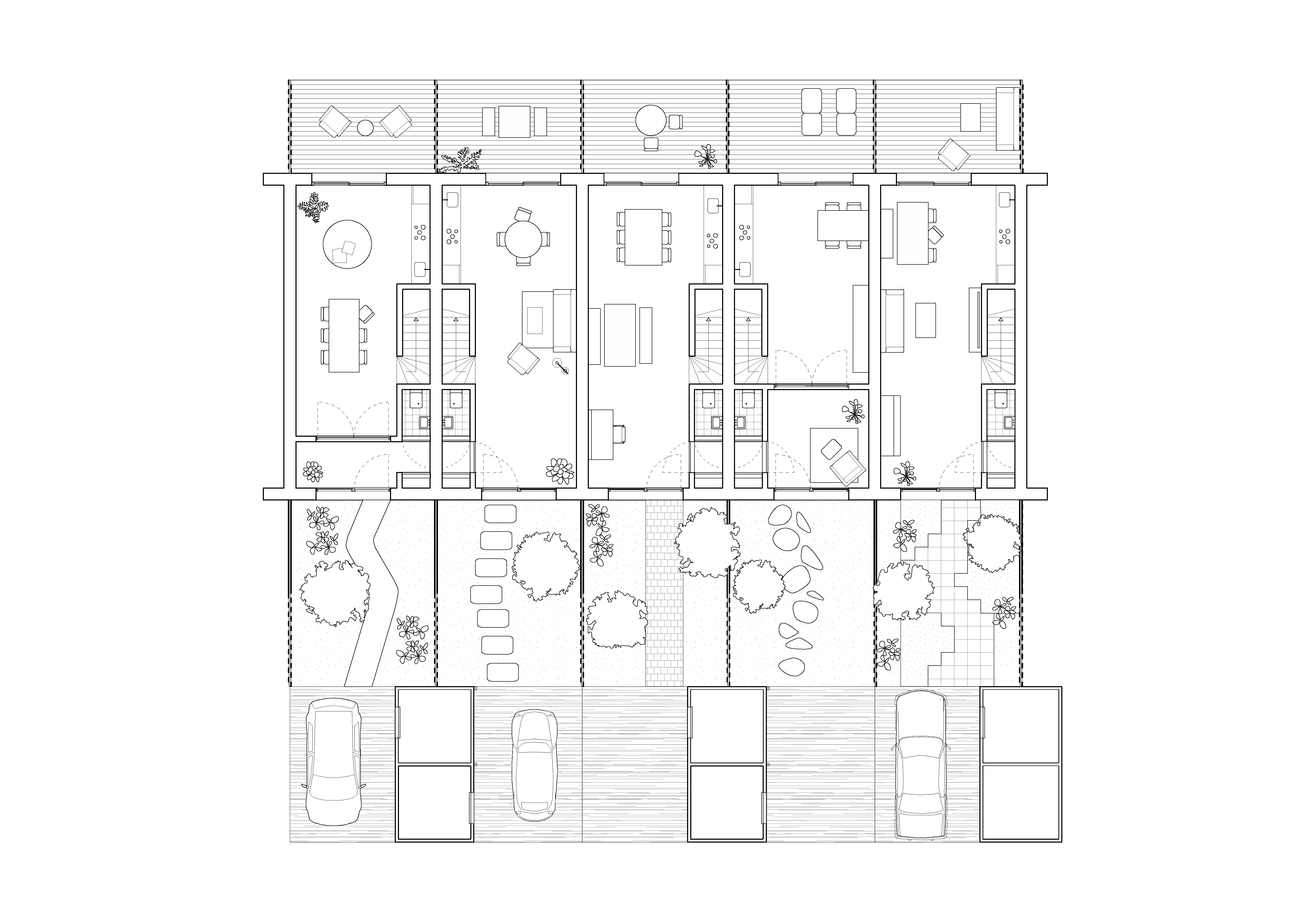
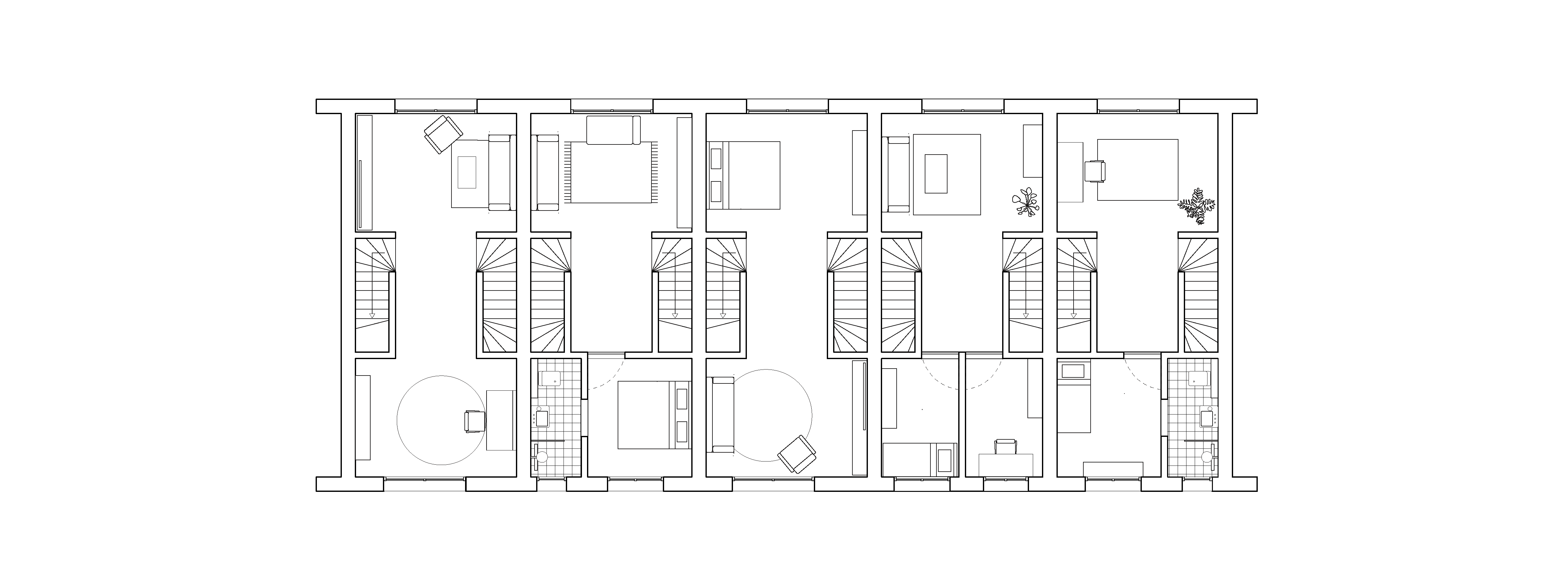
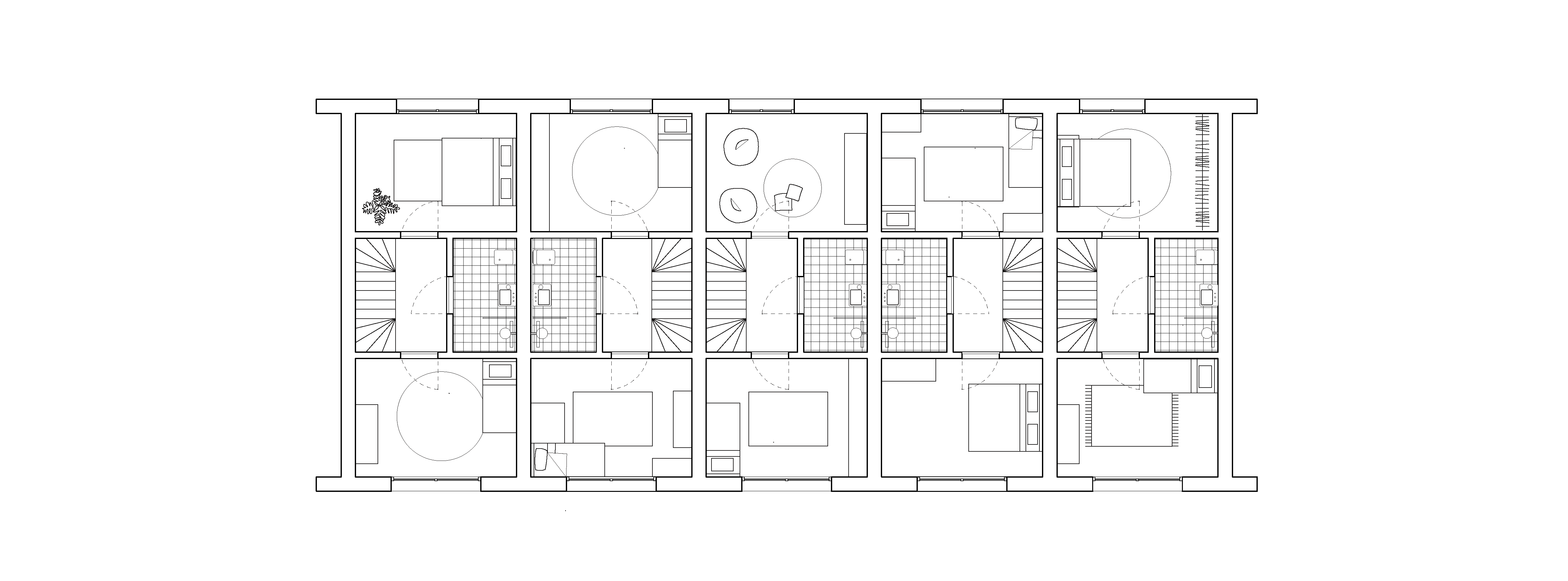
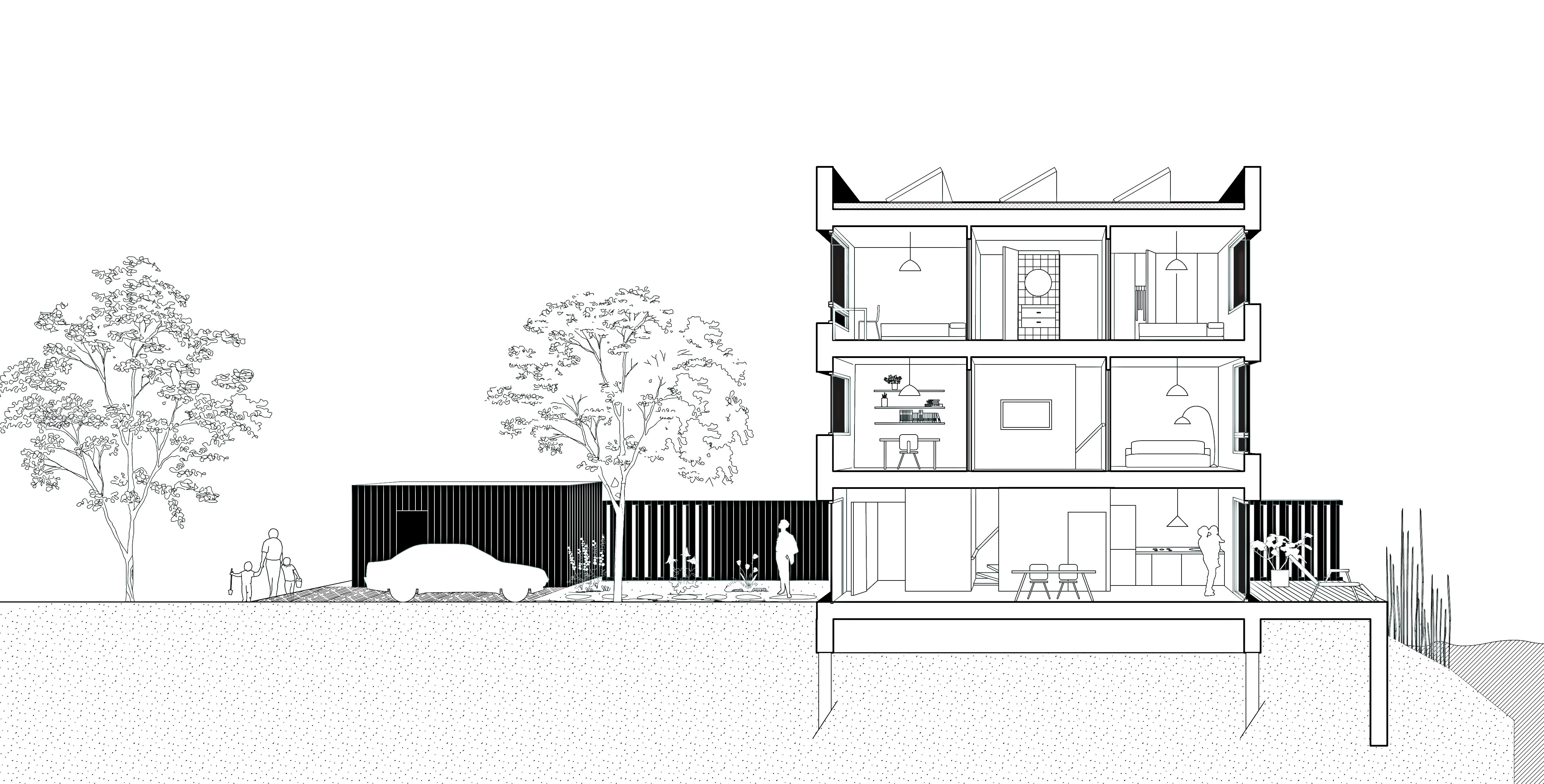
The low-rise comprises 24 homes of 125 m² across three storeys, flexibly laid out and with a strong relationship to the outdoor space. The tower contains 45 apartments of 60 m² with an internal loggia. The low-rise homes have a clear and flexible floor plan that enables a wide range of living arrangements. The preferences of buyers of the low-rise homes were incorporated into the design, allowing, for example, a family home with five full bedrooms to exist alongside a home for a couple providing informal care. Most adaptations to the generic plan are reversible, allowing future residents to adjust the homes to their own needs once again.
All homes and apartments were sold at a fixed, affordable price set in advance by the City of Amsterdam, with priority given to residents from the neighbourhood. This has stimulated mobility within the neighbourhood and preserved the social network. Switi is therefore not only a physical extension of the neighbourhood but also a social one.
CO2-Facts:
Volume of wooden elements: 1.145m3
Stored CO2 in wooden elements: 870.000 Kg CO2
Avoided CO2-emissions: 1.044.000 Kg CO2
Speed of re-growth in German forests: 35 minutes
Switi won the Dutch National Timber Construction Award 2024 in the category ‘serial timber construction’, the prize the most innovative and inspiring timber construction projects in the Netherlands and recognizes projects that combine sustainability, aesthetics and innovation in a special way.
Switi was nominated for the Zuiderkerkprize, the prestigious annual architecture award from the City of Amsterdam for the best housing project completed in the preceding year.
https://divisare.com/projects/561732-hoh-architecten-mwa-hart-nibbrig-marcel-van-der-burg-switi
Location: Kelbergen, Amsterdam South East, The Netherlands
Program: 24 ground-level homes, 45 apartments
Area: 12.100 m2
Client: BPD / Bouwfonds Gebiedsontwikkeling
Contractor: Ekowood Houses
Consultants: Nieman Raadgevende ingenieurs (fire, building physics), Constructie Adviesbureau Geuijen (construction), Adviesbureau Van Meijl Verhaegh (construction), Ripkens Wiesenkämper Ingenieure (construction)
Public space: Municipality of Amsterdam and HOH Architecten
Status: Completed September 2024, construction of public space spring 2026
Project team: Freyke Hartemink, Jarrik Ouburg, Carsten Hilgendorf, Frederique van Erven, Csenge Király, Athina Pappa
Renderings: Case Study Homes
Photography: Marcel van der Burg, Max Hart Nibbrig, Ekowood Houses, HOH Architecten